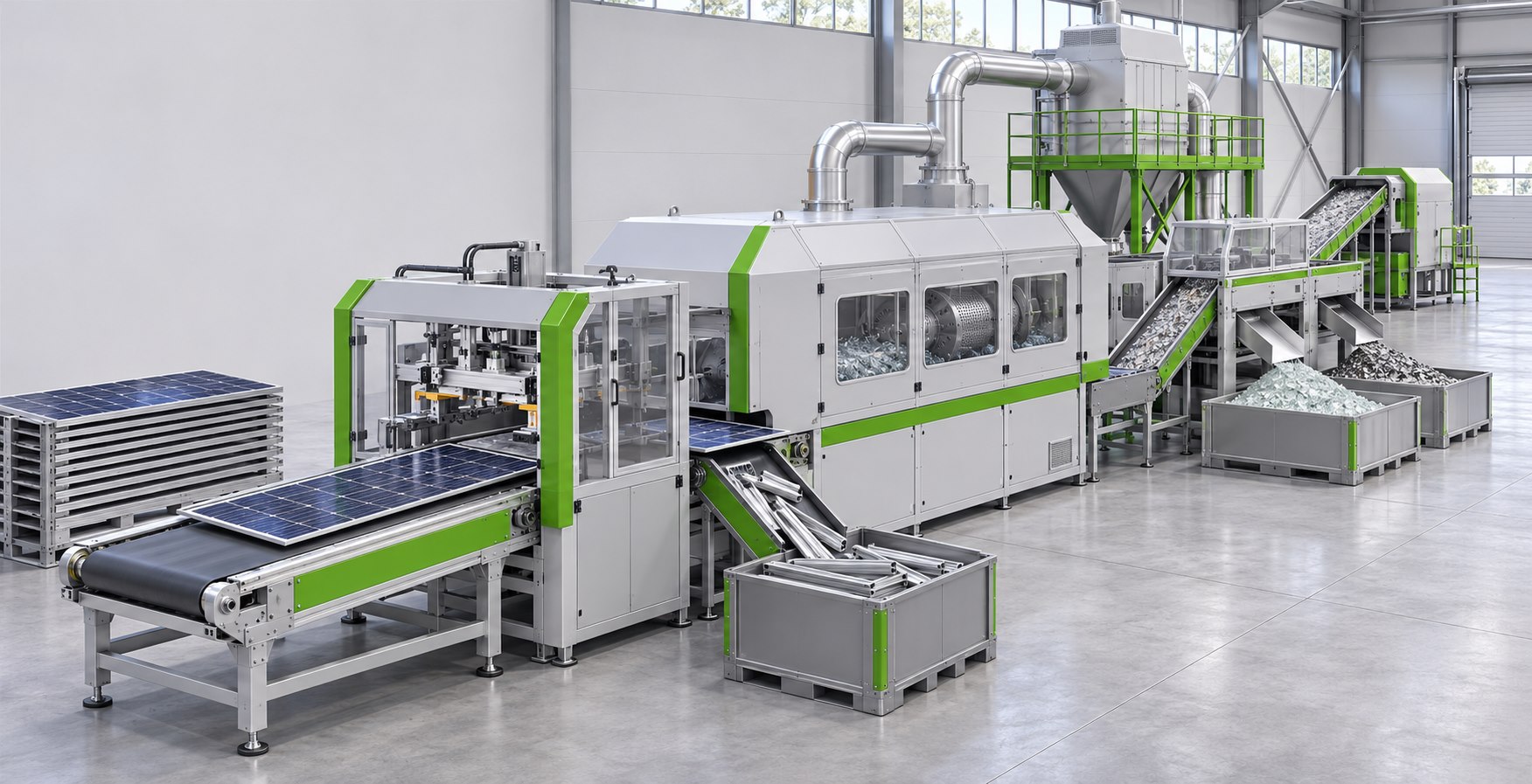
PV Module Recycling: A Procurement Guide by Buyer Type
Different buyers need different answers from a PV recycling line. This guide matches your buyer type to the commercial trigger, the procurement judgments and the questions that separate a fit-for-purpose line from a generic one.
A specialist recycler, a WEEE operator, a solar park owner and a module maker all buy PV recycling capacity, but they are not buying the same decision. This guide turns the buyer landscape into a commercial procurement tool: find your type, fix your criteria, then ask every supplier the same questions.
Find your buyer type
| Buyer type | What you care about most | Commercial trigger |
|---|---|---|
| Specialist PV recycler | Fraction quality and separation value | Winning treatment contracts as volumes rise |
| WEEE operator | Route integration and permit fit | Adding PV to an existing e-waste permit |
| Solar park owner / EPC | Decommissioning economics and material value | Repowering or end-of-life disposal |
| Module manufacturer | Scrap recovery and take-back documentation | Factory scrap cost and producer duties |
The five procurement judgments every PV buyer must make
- Route - mechanical versus thermal, decided by the module mix and the fractions you must sell
- Module mix - single-glass, double-glass or frameless, glass thickness and damage share
- Fraction buyers - who will actually take the glass, aluminium, copper and cell fraction
- Throughput and shift pattern - the sustained feed rate, not a peak
- Permit and emission basis - dust and off-gas interfaces the site can operate
Match your criteria to the questions
The table below connects each buyer type to the criterion that changes the quotation most and the question that exposes whether a supplier has understood the job. Send these questions before comparing prices.
| Buyer type | Priority criterion | Question to ask suppliers |
|---|---|---|
| Specialist PV recycler | Fraction quality | What is the glass, copper and aluminium quality your line is tested against, and on whose acceptance spec? |
| WEEE operator | Permit fit | What dust and off-gas interfaces does the line need, and can it be phased mechanical-first then thermal? |
| Solar park owner / EPC | Material value | What recovered fractions can I sell, and what changes if my module mix shifts to double-glass? |
| Module manufacturer | Scrap handling | How does the line handle off-spec cells, cut-offs and rejected modules without cross-contamination? |
Where YUSHUNXIN fits
YUSHUNXIN Environmental supplies the European project entry and route decision for PV, with the deep equipment catalogue and confirmed specifications on the dedicated PV site. The division of labour is deliberate: this page keeps the commercial and procurement logic, and the deep site carries the machine detail once the route is fixed.
PV procurement guide FAQ
Which buyer type has the most at stake?
All four carry real risk, but the specialist recycler and the WEEE operator bet their margin on fraction quality and permit fit, while the park owner and module maker bet on material value and take-back documentation. The same five judgments apply to each; the weighting changes.
Should I buy mechanical now and add thermal later?
That is often the right capital path, provided the site can permit a thermal stage. Confirm the permit headroom before you commit to a mechanical-only layout, or the expansion option can be lost.
How do I use this guide in a tender?
Copy the five judgments and the matching questions into your tender, and require every bidder to answer on the same basis. The route and fraction comparisons then become apples-to-apples.