
Crystalline Silicon PV Module Recycling
A route configured around module construction, glass thickness, encapsulant adhesion and incoming frame condition.
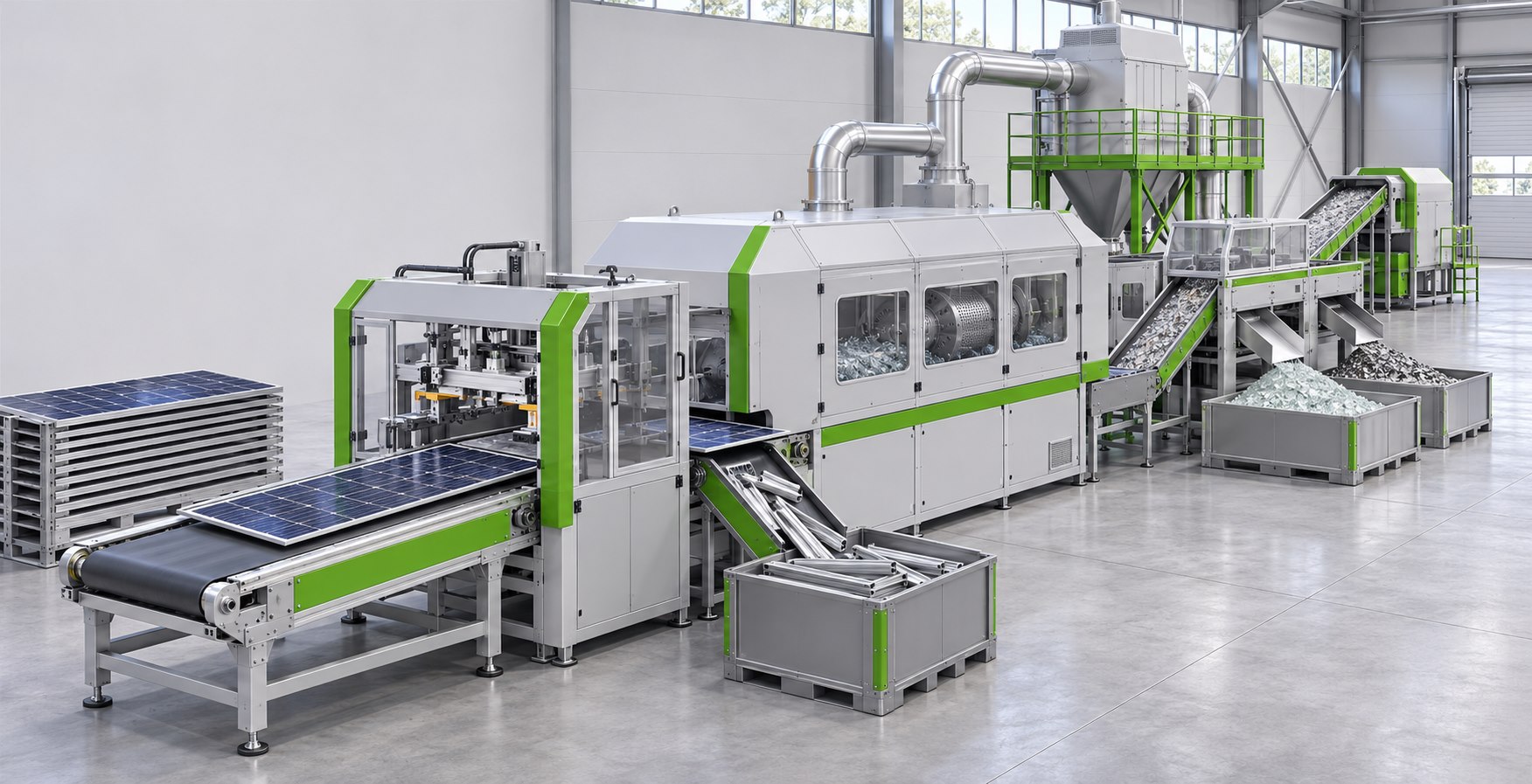
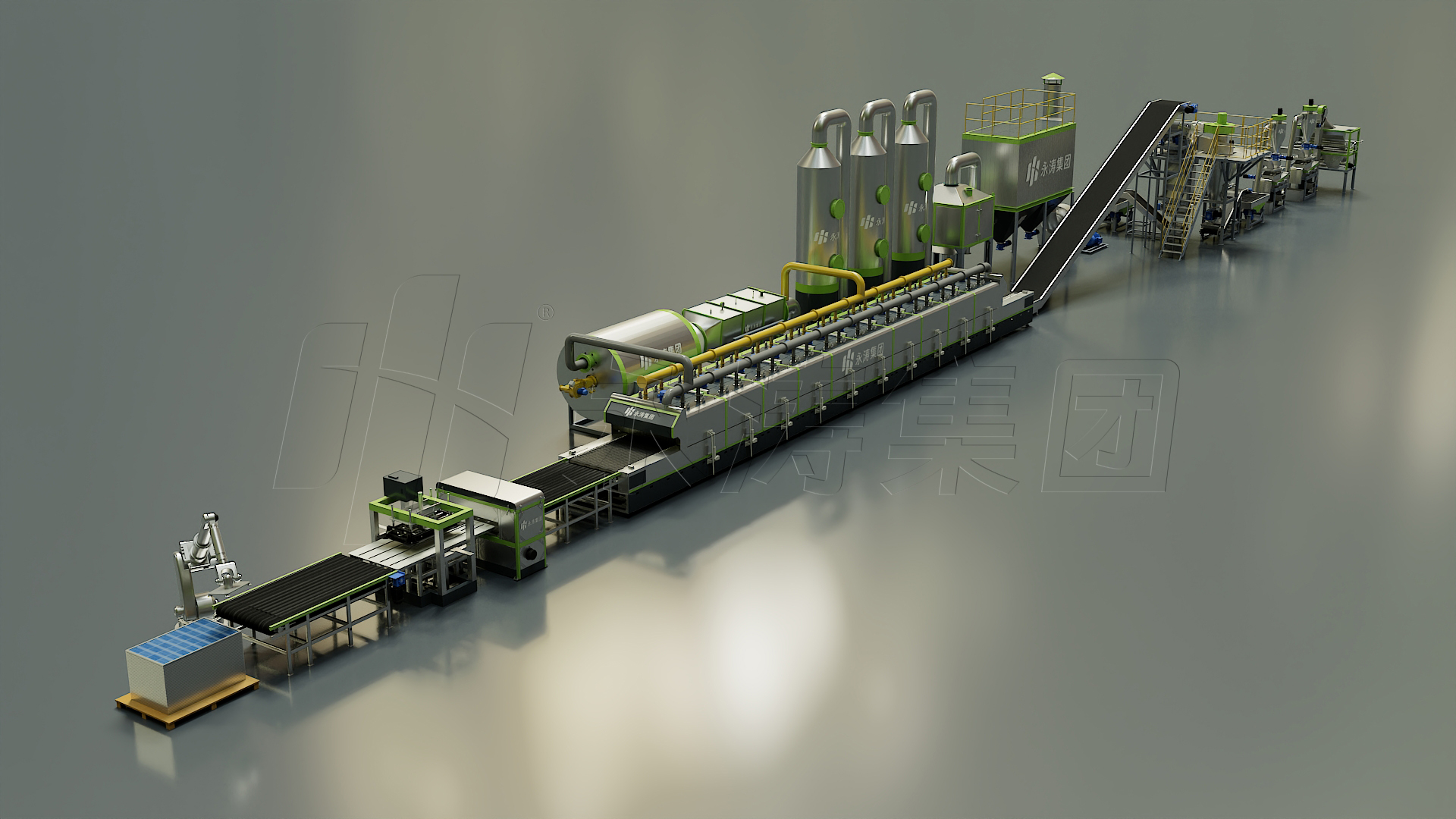
Crystalline silicon modules are separated in stages so each fraction keeps its value: aluminium frames, glass, copper and the silicon-bearing fraction.
Why the module mix decides the route
Framed single-glass, double-glass and frameless modules do not behave the same way in a line. Glass thickness, encapsulant adhesion and frame profile change the front-end stations and the separation settings, so the route starts from the actual module mix rather than a generic specification. A plant that will receive mostly damaged, mixed modules needs a different front end from one fed by a single take-back stream of uniform panels.
Typical route and the fractions it protects
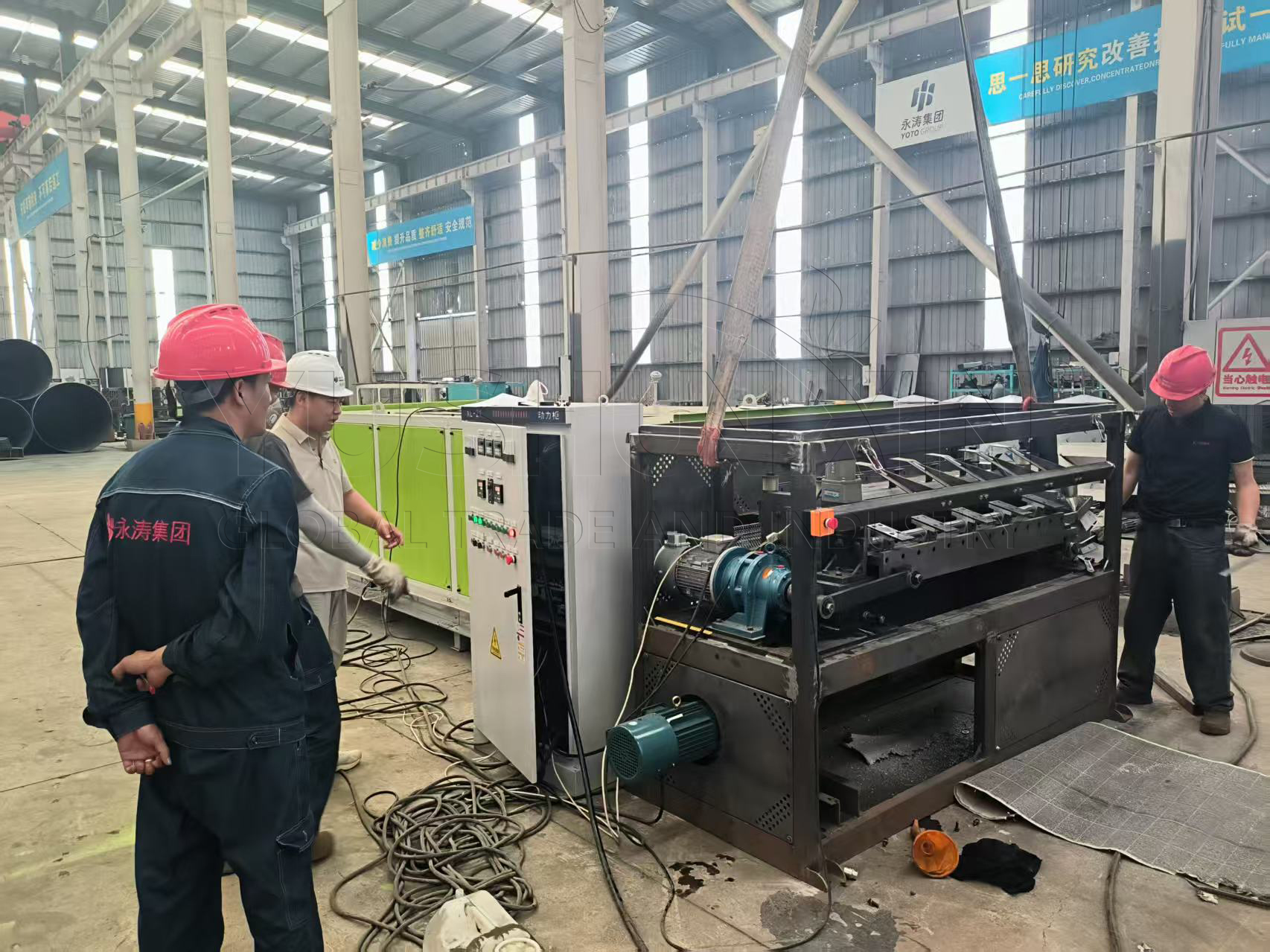
Frame and junction-box removal
Aluminium and the junction box removed before size reduction.
Glass release
Glass separated for cullet.
Laminate processing
Encapsulated laminate reduced and screened.
Fraction collection
Copper and silicon-bearing fractions routed separately.
The route is designed around protecting each fraction. Aluminium frames have scrap value, glass is valuable only if clean enough for the cullet buyer, and the laminate carries the copper and the silicon or silver-bearing cell fraction. Mixing those streams at the start would waste value that careful staging preserves.
What we need from you
- Module dimensions and glass thickness
- Single or double glass and frame condition
- Share of damaged or contaminated modules
- Target throughput and recovered-output targets
With those inputs we confirm whether a mechanical or thermal route fits and which equipment detail on the dedicated PV site matches the project. The deep equipment catalogue lives on pvdeframe.com, so this page stays focused on the project-level decision.
Crystalline silicon PV recycling FAQ
Can one line handle single-glass and double-glass modules?
The route is configured against the actual module mix because framed single-glass, double-glass and frameless modules do not behave the same way in the front end. Sending the mix, glass thickness and frame condition lets us confirm which stations are shared and which need separate settings.
Where do I find the detailed PV equipment specifications?
The deep equipment catalogue and confirmed specifications live on the dedicated PV equipment site, so this page stays focused on the project-level route decision. Once the module mix and target fractions are defined, we point you to the matching equipment pages.
The route also scales with the site. A recycler that starts with a single shift and grows to three shifts can phase the front-end and separation stages rather than replacing the line, so the first purchase should be laid out with that growth in mind. The module mix, the fraction buyers and the site permit are the three inputs that decide how far that first layout should go.