
ENV-CAS-4000 Coated Aluminium Scrap Decoating Line
An industrial thermal decoating line for painted aluminium profiles, PVDF panels and colour-coated coils, cleaning the metal before remelting with three-stage PID temperature control.
The ENV-CAS-4000 removes paint, powder and PVDF coatings from coated aluminium scrap before the metal enters the remelt furnace, using three-stage independent PID temperature control from 400 to 540 C. The result is a clean metal charge with the coating volatiles handled through the off-gas system instead of burning inside the melt.
Coating chemistry sets the temperature and residence parameters
Powder coatings, liquid paints, PVDF architectural films and colour-coated coil lacquers decompose at different temperatures and release different volatile loads. A profile line painted with a thick architectural coating is not the same duty as a thin colour-coated sheet, which is why the furnace uses three-stage independent PID control rather than a single setpoint. Matching the temperature ramp and residence time to the actual coating mix removes the coating completely while limiting the heat the base aluminium absorbs, protecting metal recovery.
Treating every coated scrap as one material is the most common specification error in this duty. A thick architectural coating holds more binder and releases a larger volatile load than a thin colour coat, and the difference shows up in both the temperature profile and the off-gas system. The coating description is therefore as important as the aluminium alloy itself.
The same coating description also tells the supplier what the off-gas will carry. A paint rich in pigments and binders releases a different volatile and particulate load than a thin clear lacquer, so the chemistry and the gas handling are specified together rather than one after the other. Leaving the coating out of the request is how a line ends up with an off-gas system that does not match the furnace.
Three-stage PID heating and why it matters
Three-stage independent PID control lets the line hold a deliberate temperature profile from entry to exit instead of a single averaged temperature. The first stage drives off moisture and light volatiles, the middle stage decomposes the main coating body, and the final stage finishes the surface and stabilises the charge for transfer. This staged approach keeps the coating removal complete without overheating the aluminium, which would increase oxidation and metal loss. The confirmed operating range is 400 to 540 C, set against the coating chemistry of the project.
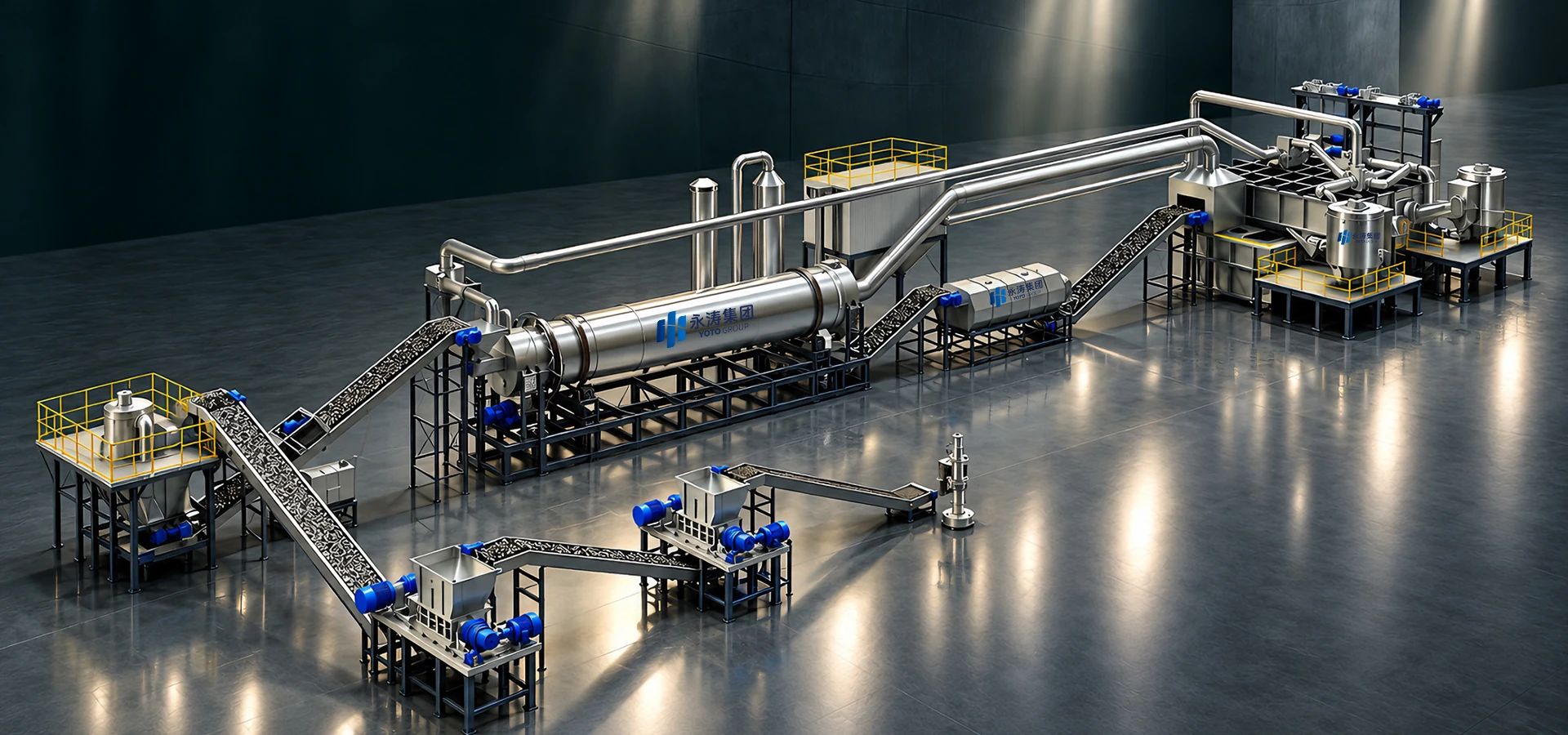
The staged profile is what makes complete removal possible without over-riding the metal. If the whole furnace sat at the final temperature, the surface would clean but the metal would absorb more heat than necessary. Ramping the charge through three controlled zones finishes the coating while limiting oxidation.
The three zones also let the line follow a changing feed. When a plant changes coating suppliers or takes seasonal scrap, the profile is re-tuned without redesigning the furnace, which is the flexibility a merchant recycler actually needs. A single-setpoint furnace would have to be over-heated to cover the range, and that heat ends up as oxidation and metal loss.
Confirmed specifications
| Processing capacity | 1.5-6 metric tons per hour |
|---|---|
| Heating control | 3-stage independent PID, 400-540 C |
| Feedstock | Powder-coated extrusions, PVDF panels, painted sheets, heat-sink extrusions |
The capacity range reflects the fact that thin sheet and heavy profiles run at very different rates. The same line is rated across the range, but the practical throughput for your scrap is confirmed from the section thickness and coating load, not from the headline number.
The table states the stable envelope: capacity, the three-stage PID control range and the feedstock classes. The profile that your scrap actually needs is confirmed from the coating chemistry and section thickness, which is why the specification page separates confirmed figures from project-specific values.
The table is deliberately short because the project values are confirmed from the feed. A longer published table would imply a fixed profile that does not fit the range of coatings and sections, so the confirmed envelope plus an on-request profile is the honest format. The page states what is stable and leaves what varies to the quotation, where it can be tied to a real basis. A buyer should read the two together, and not expect one number to do both jobs. The two documents have different jobs.
Suitable input and the scrap types it cleans
- Powder-coated aluminium extrusions
- PVDF architectural panels and cladding
- Painted aluminium sheets and siding
- Colour-coated coils
- Heat-sink extrusions with thermal paste or coating residue
Each scrap type brings a different section thickness and coating load. Thin sheet reaches temperature quickly and can tolerate a faster pass, while a heavy extrusion needs more residence to drive the coating out of the profile without overheating the section. The same line is set differently for each, which is why the feed description is the first specification input.
Thin sheet brings a hidden duty that is easy to under-scope: it carries a large coating surface for its weight. The off-gas system is sized on the coating load, not the metal mass, which is why a lightweight painted panel stream can demand more gas handling than a heavier but cleaner profile stream.
Each scrap type also has a different value and a different buyer, so the cleaning requirement is set by where the metal goes. A profile bound for a smelter may accept more residue than one bound for a billet caster, and the line is set to the tighter of the two. Stating the buyer's residue limit is therefore part of the feed description, not a downstream detail.
Off-gas and emission handling for coated scrap
Coating decomposition releases volatiles that must be routed and treated, not vented. The decoating line pairs with an off-gas system that handles the coating load and meets the published thermal process emission basis. Because the permit and the coating mix are site-specific, the emission interfaces are confirmed during specification. This is the part of the purchase that is easy to under-scope, and it is cheaper to design it in than to retrofit after commissioning.
Decomposition volatiles must be routed and treated rather than vented, and the recirculation or gas-cleaning route follows the permit. Under-scoping this part of the purchase is expensive because it only becomes visible after commissioning, when retrofitting is far more costly than designing it in.
The off-gas system is a project interface, not a catalogue item. Its duty follows the coating load and the permit, and it has to be specified with the furnace so the two cannot disagree at start-up. A furnace quoted without its off-gas is a partial offer, and the missing part is usually the most expensive to add later. Sizing it with the furnace is the only way to close that gap before it opens on site.
How to specify the line for your scrap mix
Send the scrap type, section thickness, coating chemistry, hourly throughput and the residual limit your melt furnace can accept. From those we confirm the temperature profile, drum or conveyor duty, off-gas sizing and the melt transfer interface. If the scrap mix changes seasonally or by source, tell us the range, because a line specified for the average may struggle with the extremes.
Describe the extremes, not just the average. If the scrap mix changes seasonally or by source, a line specified for the average will struggle on the worst days. The temperature profile, residence and off-gas duty are confirmed for the full range you will actually feed.
A buyer who describes the extremes instead of the average gets a line that runs every day, not just on the good days. That range is the difference between a specification that survives contact with the real scrap and one that has to be re-tuned on site, where every adjustment costs production time. Describe the worst case and the line is built for it; describe only the average and the line is built for the wrong plant. The range is the specification, and the extremes are where the cost hides.
Comparing coated scrap duties
Heavy sections need a slower ramp and longer residence so the coating decomposes without overheating the metal. Heat-sink extrusions add the complication of residual paste and thin fins that heat quickly.
Thin PVDF panels and painted sheet reach temperature fast and can run at higher throughput, but they carry a large coating surface for their weight, so the off-gas duty is set by the coating load rather than the metal mass.
Coated aluminium decoating FAQ
What temperature does the line run at?
The confirmed range is 400 to 540 C with three-stage independent PID control, and the actual profile is set against the coating chemistry and section thickness of your scrap. The goal is complete coating removal with the least possible heat absorbed by the aluminium.
Can I process mixed painted and uncoated scrap?
Uncoated scrap does not need decoating and passing it through adds no value while consuming energy. If the stream is mixed, we size the line for the coated fraction and recommend separating the clean metal where practical.
How is the off-gas handled?
Coating volatiles are routed through an off-gas system sized for the coating load and the site permit, following the published thermal process emission basis. We confirm the interfaces against your permit, not against a generic stack treatment.
Related equipment and applications
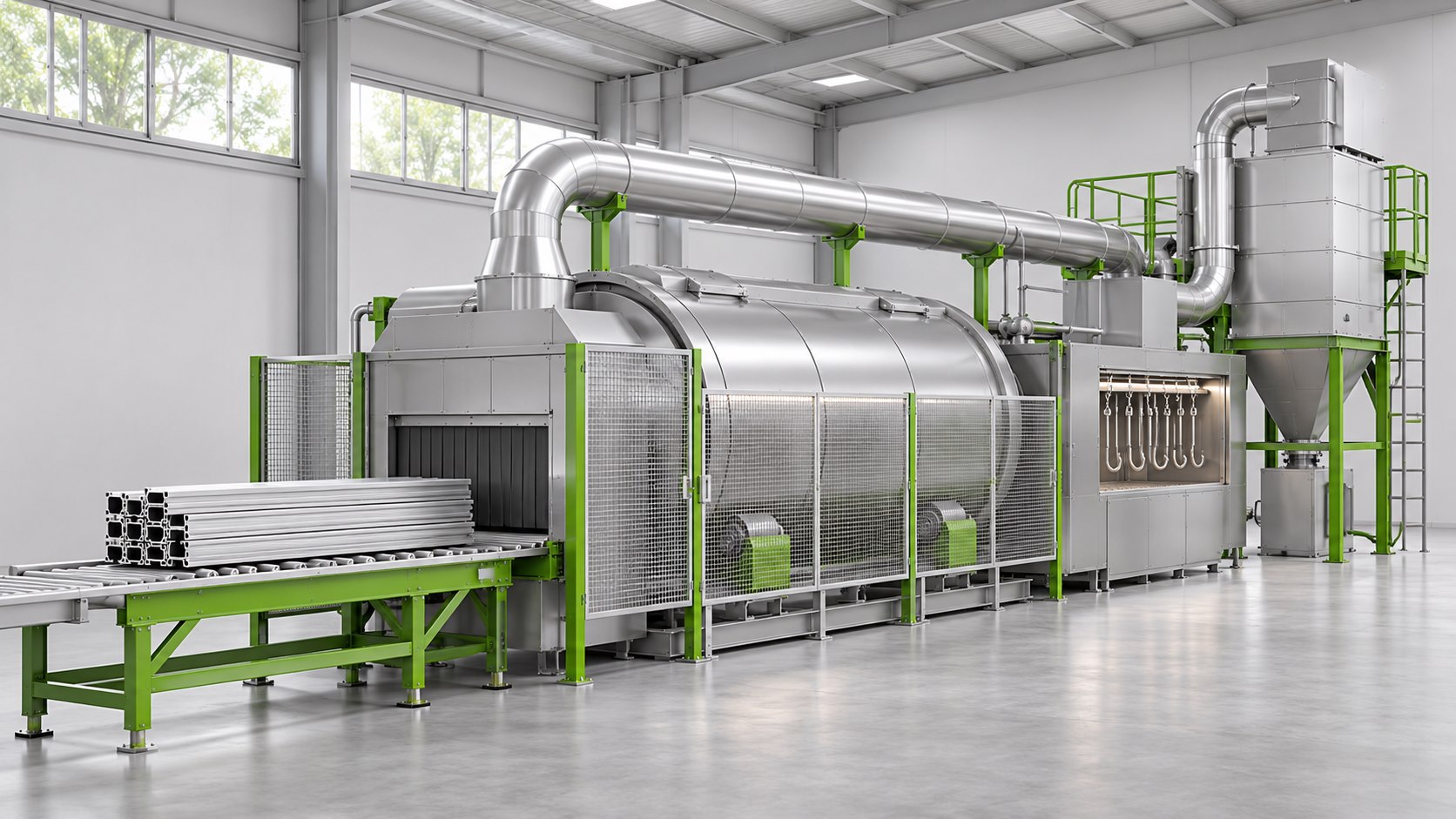
Coated Aluminium Scrap Application
How coating chemistry, residual limits and melt capacity set the decoating route.
UBC Decoating Furnace
The continuous rotary furnace for lacquered beverage cans before melting.
Thermal Decoating & Cleaning
The board that covers decoating and thermal cleaning duties together.