
Battery Manufacturing Scrap Recycling
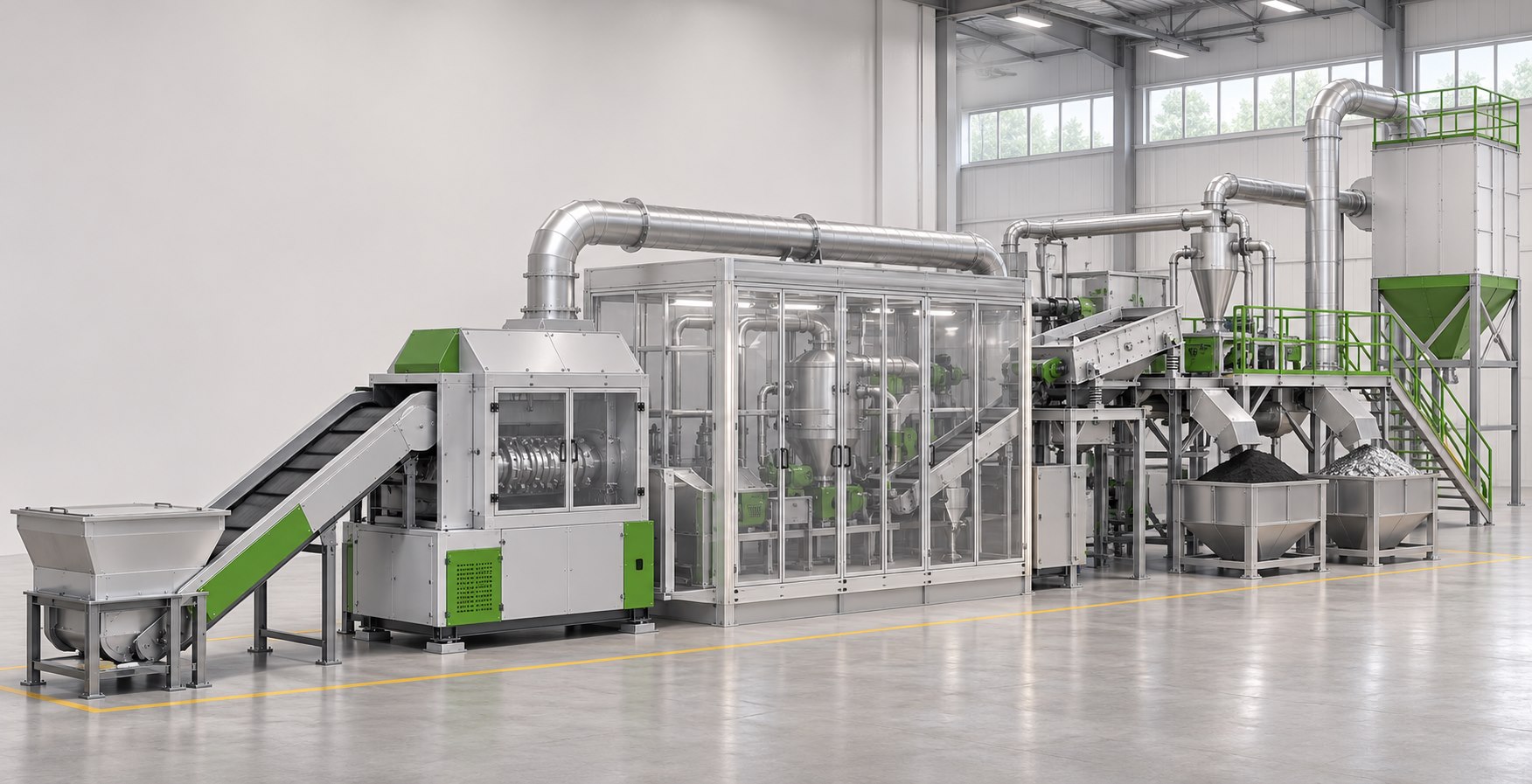
Production scrap is processed by chemistry, format and state of charge to recover black mass, copper and aluminium.
Off-spec cells, electrode cut-offs and pack production residues need a route matched to their chemistry and energy state.
Why production scrap differs from end-of-life
Production scrap is usually cleaner and more homogeneous than end-of-life batteries, but it can carry residual charge and reactive material. The route balances recovery quality against the safety and dust basis of the factory. Because the material is often generated inside the plant, it can be segregated by chemistry and format at source, which makes the downstream separation easier and the fractions more valuable.
Typical route and what it protects
Discharge or stabilization
Residual energy managed before reduction.
Shredding
Scrap reduced under controlled conditions.
Separation
Black mass, copper and aluminium routed separately.
The same dry physical principle applies as for end-of-life cells, but the cleaner feed often allows a leaner front end. The value is still in the separated fractions: black mass for refining, and clean copper and aluminium for smelters.
What we need from you
- Chemistry and cell format
- Physical form and state of charge
- Contamination and packaging
- Target throughput and output fractions
Battery production scrap FAQ
Does production scrap need the same safety route as end-of-life cells?
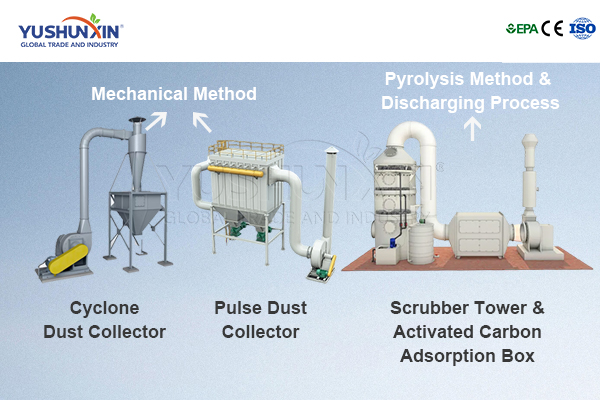
The same dry physical principle applies, but the cleaner and more homogeneous feed often allows a leaner front end. Residual charge and reactive material are still declared and managed, so discharge and dust control remain part of the route.
What value is recovered from off-spec cells and cut-offs?
The value sits in the separated fractions: black mass for refining, and clean copper and aluminium for smelters. Segregating the scrap by chemistry and format at source makes those fractions easier to recover and more valuable.
The same principle applies to the factory itself. Production scrap is generated inside the plant, so it can be segregated by chemistry and format at source, which makes the downstream separation easier and the recovered fractions more valuable. Stating the scrap types, the state of charge and the contamination up front lets the route be matched to the residues the factory actually produces, turning the plant into a controlled recovery step that protects both the material value and the plant's own handling.
The route is supplied within the standard engineering boundary, with nitrogen inerting where the feed needs it and discharge and dust control kept in the design. The plant is built at the 25,000 m2 manufacturing base in Henan, China against the confirmed ISO9001, CE and EPA Compliant basis, and standard lines are manufactured in 30 to 45 days.