
Coated Aluminium Scrap Decoating
Coated aluminium scrap is decoated before remelting so the metal charge stays clean and dross stays low.
Coated scrap needs a route matched to the coating chemistry, residual limits and the melt capacity the site runs.
Coating chemistry sets the parameters
Paint, powder and laminate coatings decompose at different temperatures and release different volatiles. The decoating temperature, residence time and off-gas system are set against the actual coating mix rather than a single canned specification. Declaring any halogenated films is essential, because halogen content changes the gas-cleaning scope significantly.
Typical route and the section question
Feeding
Scrap metered by size and cleanliness.
Decoating
Coating removed under controlled conditions.
Off-gas handling
Volatiles routed to emission control.
Transfer to melt
Clean metal delivered to the melt stage.
Section thickness matters as much as coating chemistry. Thin sheet reaches temperature quickly and tolerates a faster pass, while a heavy extrusion needs more residence to drive the coating out without overheating the metal. The confirmed ENV-CAS-4000 range is 400 to 540 C with three-stage PID control.
What we need from you
- Scrap type and coating chemistry
- Contamination and packaging
- Throughput and residual limits
- Melt capacity and energy basis
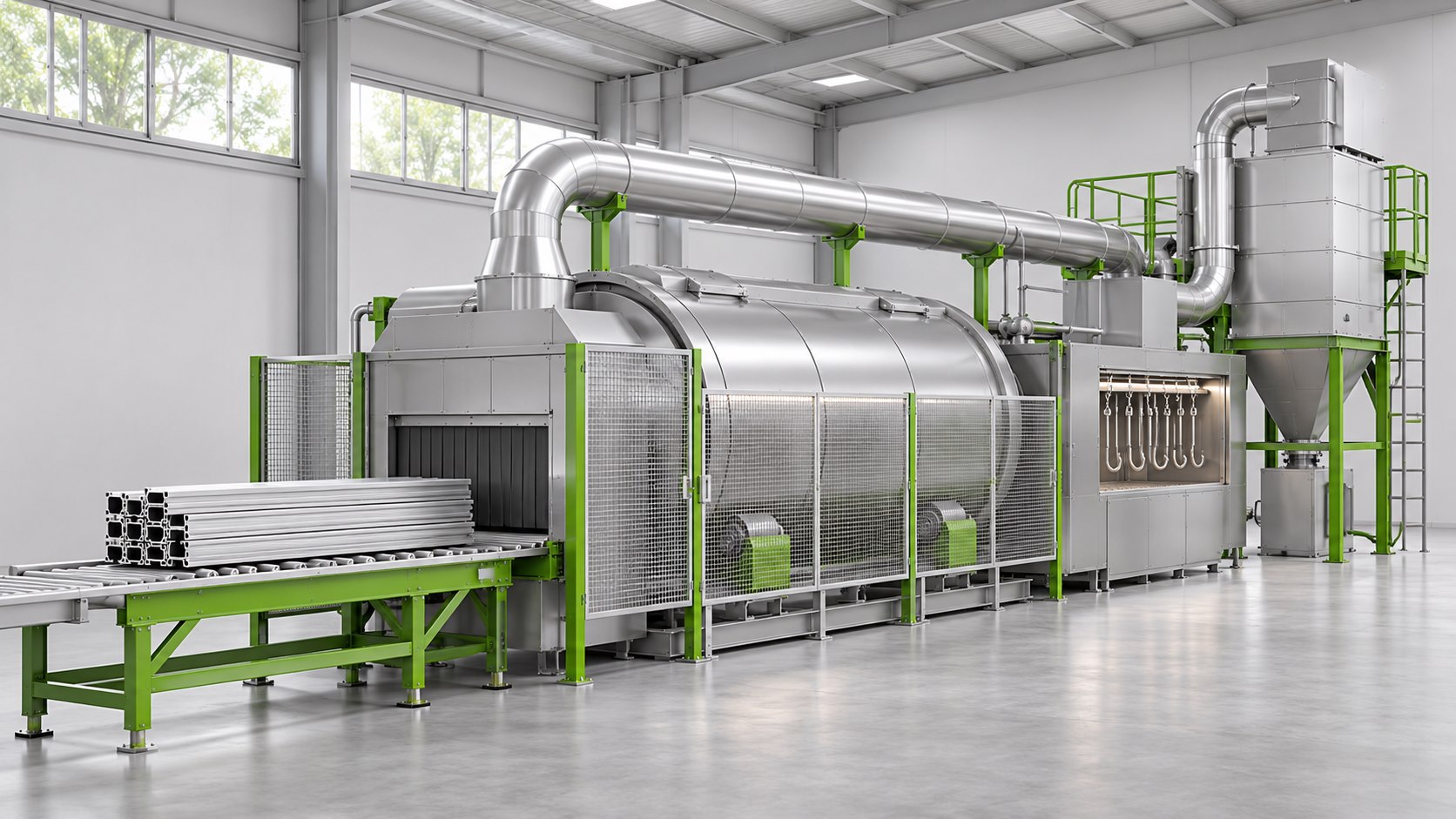
Coated aluminium scrap FAQ
Why does coating chemistry matter so much?
Paint, powder and laminate coatings decompose at different temperatures and release different volatiles, and halogenated films change the gas-cleaning scope. The decoating temperature, residence and off-gas system are set against the actual coating mix rather than a canned specification.
Does section thickness change the route?
Yes. Thin sheet reaches temperature quickly and tolerates a faster pass, while a heavy extrusion needs more residence to drive the coating out without overheating the metal. The confirmed ENV-CAS-4000 range is 400 to 540 C with three-stage PID control.
The off-gas duty follows the coating load rather than the metal mass, so describing the scrap by section and coating, including any halogenated films, lets the line be set correctly the first time.
The residual limit the melt furnace can accept is the last input, because it sets how clean the metal has to be before it leaves the decoating line for the melt.
The decoating duty sits inside the same engineering boundary as every other line. The equipment is built at the 25,000 m2 manufacturing base in Henan, China, with the temperature control, off-gas and safety systems documented against the confirmed ISO9001, CE and EPA Compliant basis. Standard lines are manufactured in 30 to 45 days, with the motor voltage matched to the site's 380, 480 or 600 V supply.