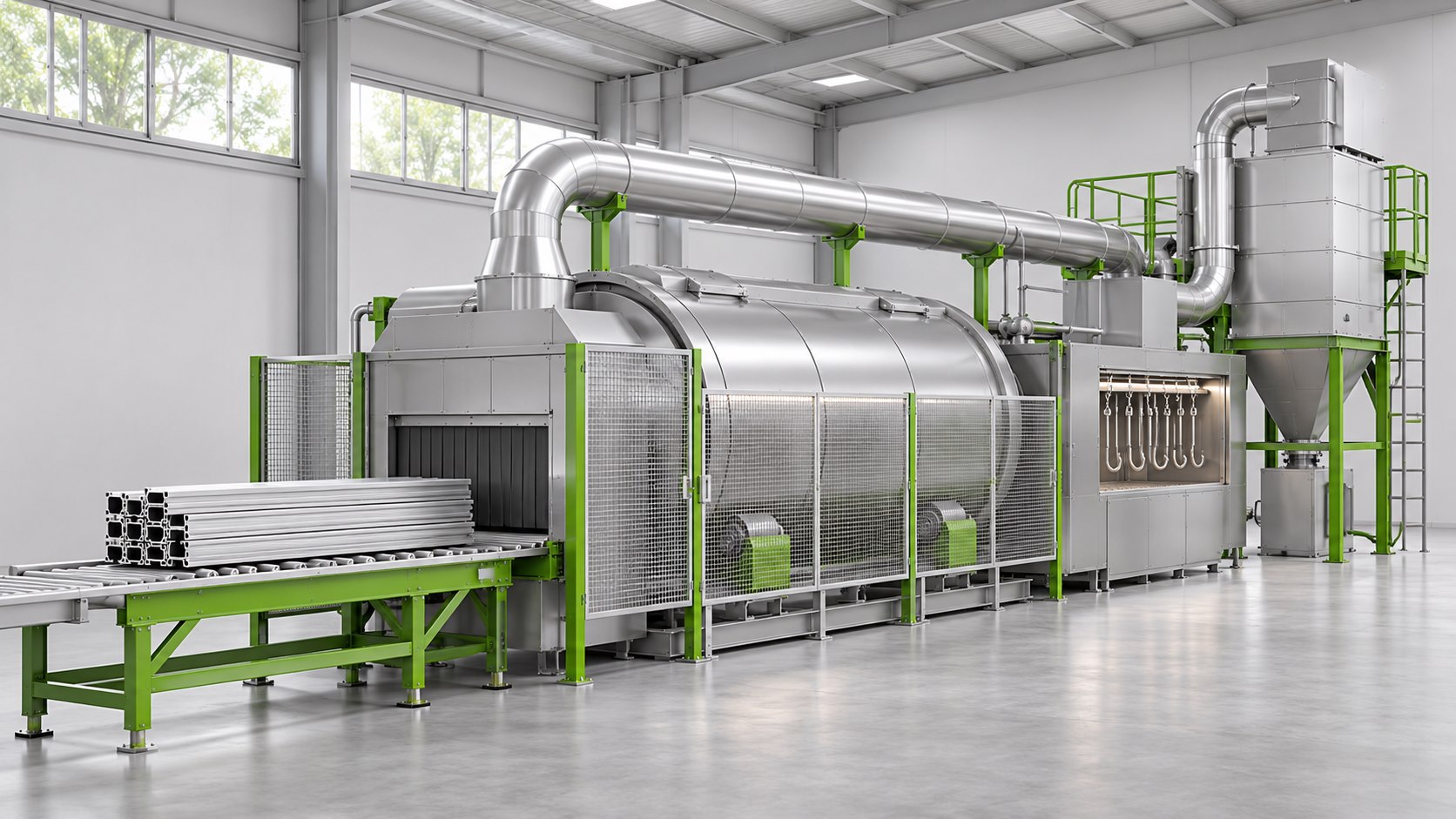
ENV-APL-2000 Aluminium-Plastic Scrap Thermal Delamination Line
Oxygen-free thermal separation and gasification for pharmaceutical blister packs, aluminium composite panels and food packaging foils, recovering the metal while controlling the polymer fraction.
The ENV-APL-2000 separates aluminium from plastic in composite scrap under an oxygen-free atmosphere, recovering the metal while gasifying the polymer fraction under control. This is the route for blister packs, aluminium composite panels and laminated food foils where mechanical separation leaves too much polymer attached to the metal.
Why composite scrap needs thermal separation
The bond between aluminium and polymer is deliberate, so mechanical separation can only tear the material, not cleanly part the layers. Density or eddy-current sorting cannot separate the two at the millimetre scale, and whatever polymer remains on the metal burns or smokes downstream. Thermal delamination under an oxygen-free atmosphere breaks the bond itself and gasifies the polymer while protecting the aluminium from oxidation, so the metal comes out clean and the polymer fraction is handled as a process gas rather than furnace smoke.
Oxygen-free heating and the gasification route
The key to the route is excluding oxygen during the heating step. In an oxygen-free environment the polymer decomposes into a fuel gas instead of burning, which can be used to offset the process energy, while the aluminium remains metallic rather than oxidising. Indirect uniform heating, either electric or burner based, brings the charge to the confirmed 380-450 C range where the polymer decomposes without melting the aluminium. The atmosphere is the value control rather than just a safety setting, so heating and atmosphere are specified together as one process condition.
Confirmed specifications
| Processing capacity | 800-3,000 kg/h |
|---|---|
| Operating temperature | 380-450 C |
| Heating | Indirect uniform electric or burner heating |
| Feedstock | Medical blister scrap, aluminium composite panels, food pouch foils |
The capacity and temperature range are the stable envelope, but the practical duty is confirmed from the composite. A thicker polyethylene core needs longer residence than a thin blister foil, and the metal fraction weight changes the heating and handling design.
The table is kept short because the residence time and gas duty follow the composite. A fixed published profile would mislead buyers whose blister packs differ from someone else's composite panels, so the envelope plus an on-request profile is the honest way to specify it. What stays stable is public, and what varies is confirmed against the actual material. A buyer should expect the public envelope and the project profile to be two different documents, each with its own basis and its own stated assumptions about the material.
Feedstock types and their different behaviours
- Pharmaceutical blister packs with thin foil and PVC or PVDC film
- Aluminium composite panels with a polyethylene core
- Food pouch foils with multi-layer laminates
- Flexible packaging trim from converting operations
The polymer type matters because PVC, polyethylene and multi-layer laminates decompose differently and release different gas loads. A blister stream dominated by PVC needs different gas handling from a composite panel stream dominated by polyethylene. Describing the polymer mix, not just the aluminium content, is what lets the line be specified correctly.
The metal fraction also differs in value. Thin blister foil has a different buyer than the heavy sheet from a composite panel, so the cleanliness and thickness targets are set by where each fraction is sold, not by one generic standard. Describing the composite types and their buyers is what lets the line be set to the value it must protect. The buyer's acceptance limits are part of the feed description, and they decide how clean each fraction must be.
Off-gas, energy and emission handling
The gasified polymer is a fuel stream that can be routed to offset process energy, with the remainder treated through the off-gas system to the published thermal process emission basis. The permit and the polymer chemistry determine the final gas-cleaning interfaces. This is a closed, controlled route, which is why it suits operators that must keep halogenated films or odorous polymers out of an open burn.
The closed route is also what makes the process acceptable on a site that cannot vent odorous or halogenated gases. By keeping the polymer decomposition inside the equipment and treating the gas stream, the plant avoids the open burn that neighbours and regulators reject. The controlled route is therefore as much a permit and community question as a recovery question. A buyer who needs to control odours and halogens should state that from the start, because it changes the gas-cleaning scope from the very first quotation onward.
How to specify the line for your composite
Send the composite type, the polymer chemistry, the foil thickness and the hourly volume. From those we confirm the heating route, the temperature and residence time, the gas handling duty and the metal fraction quality. If you receive mixed composites, describe the blend and its halogen content: halogen changes the gas-cleaning scope more than any other single input, and a mixed PVC stream needs different handling from clean polyethylene.
A representative sample closes the loop. Once the composite, polymer mix and halogen content are declared, a small trial confirms the temperature profile and the metal fraction quality before the production line is committed.
Composite handling by material
Thin foil and PVC or PVDC film gasify readily, but the halogen content sets the gas-cleaning duty and must be declared before quotation.
Thicker polyethylene cores need longer residence to fully decompose, and the metal fraction is heavier, which shifts the heating and handling design.
Aluminium-plastic delamination FAQ
What temperature does the line run at?
The confirmed operating range is 380 to 450 C under an oxygen-free atmosphere, with the exact profile set by the polymer chemistry and material thickness. The aim is complete polymer decomposition without oxidising or melting the aluminium.
Can it process halogenated films such as PVC?
Yes, but the halogen content must be declared because it sets the gas-cleaning duty. PVC and PVDC films release chlorine-containing gases that the off-gas system is specified to handle; hiding the chemistry would produce a mis-sized line.
What happens to the polymer fraction?
The polymer is gasified under oxygen-free conditions and the resulting fuel gas can offset process energy, with the remainder treated before release. The route recovers the aluminium while handling the polymer as a controlled gas stream.