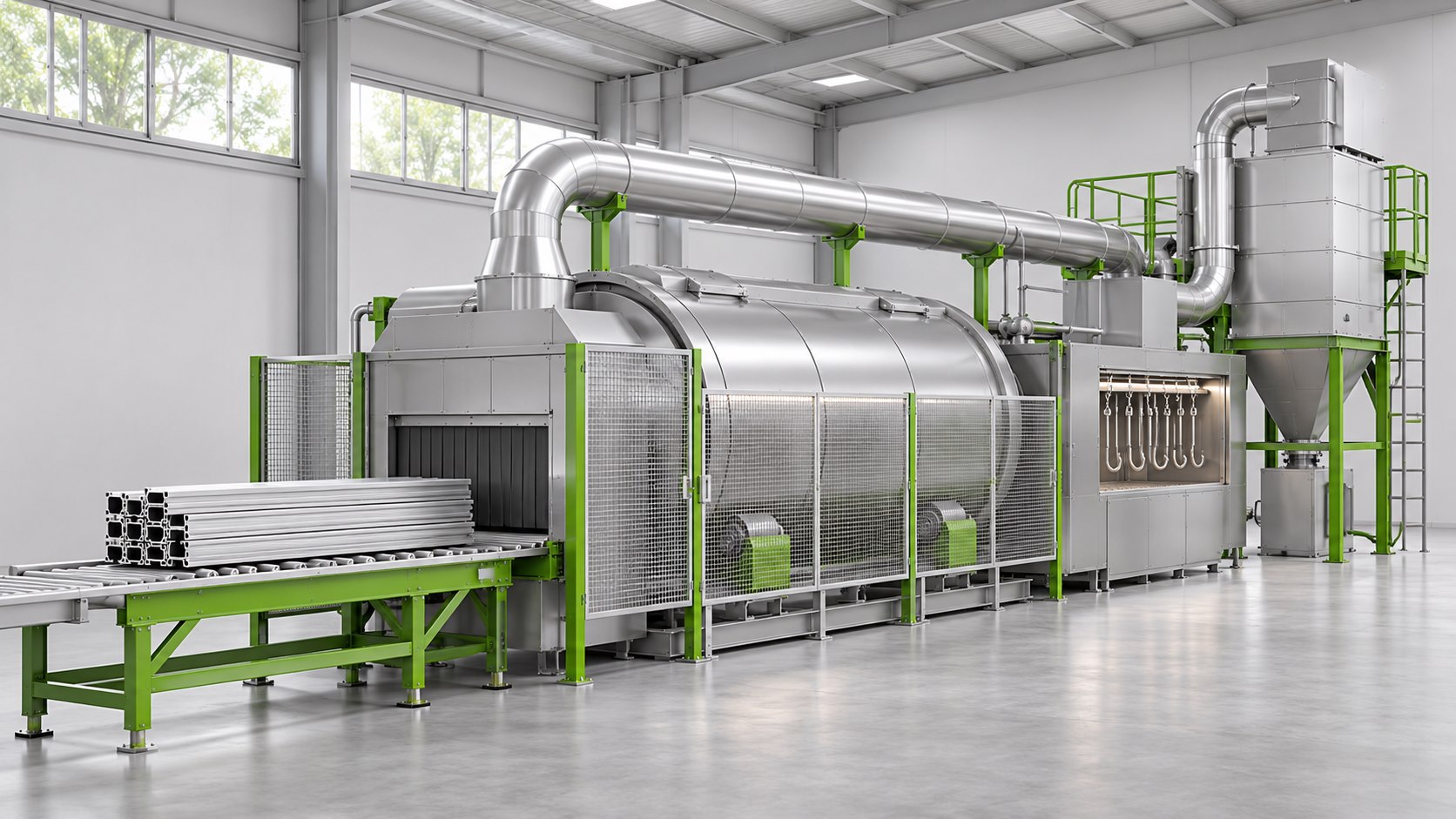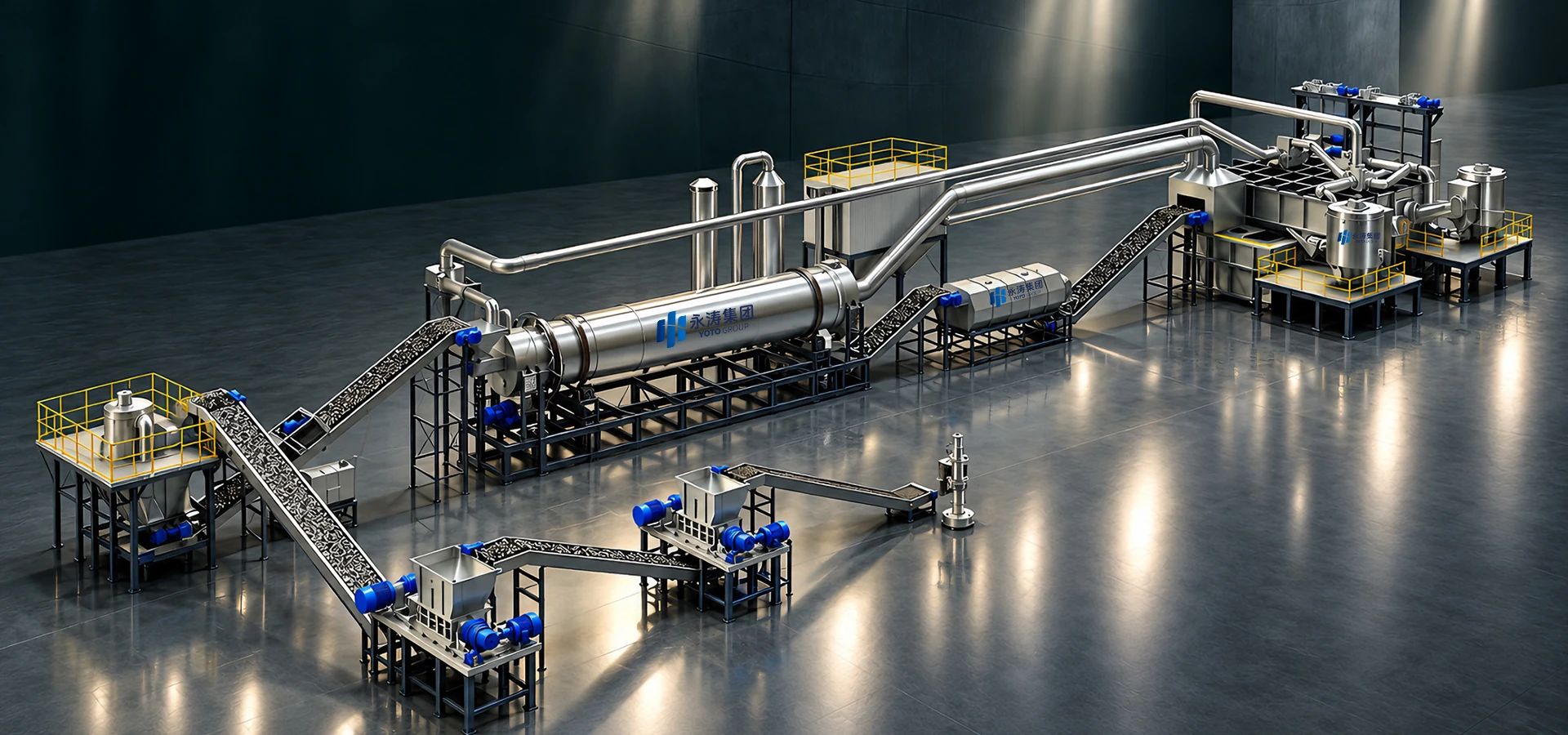
ENV-ACD-3000 Aluminium Chip De-oiling & Drying Line
Centrifugal de-oiling, continuous thermal drying and tramp metal separation prepare oily aluminium machining chips and CNC turnings for a clean remelt charge.
The ENV-ACD-3000 takes oily aluminium chips, turnings and swarf and returns dry, tramp-free metal ready for the melt furnace. Removing cutting oil and moisture before melting prevents oil fires, smoke and dross in the furnace and recovers oil that would otherwise be lost.
Why oily chips need de-oiling before the melt
Machining chips carry cutting oil and moisture that create serious problems if charged directly into a furnace: oil ignites and smokes, moisture expands as steam, and both contribute to oxidation and dross. The metal value in the chip is partly lost to the very contaminant that made it machineable. De-oiling and drying recover the oil as a reusable stream and deliver a metal charge that melts cleanly, with lower dross and a more stable furnace atmosphere. For a plant that buys or generates large chip volumes, this stage pays for itself in metal yield and furnace reliability.
The metal is only part of the charge weight. Oil and moisture that enter with the chips either burn, vaporise or oxidise in the furnace, and all three outcomes cost metal and furnace time. Removing them first turns a contaminant into a recoverable stream and a dirty charge into a clean one.
The cleaner charge also protects the furnace refractory and the burner. Oil that burns inside the furnace deposits carbon and stresses the lining, so removing it first extends the equipment life as well as the metal yield. A de-oiling line is therefore a furnace-protection investment, not just a way to clean chips before they melt.
Three stages: centrifugal de-oiling, drying, tramp separation
Centrifugal de-oiling
Bulk cutting oil is thrown off the chips by centrifugal force, recovering the oil for reuse or disposal rather than burning it.
Thermal drying
Residual oil and moisture are driven off continuously so the chips are dry before they reach the melt.
Tramp metal separation
Steel and stainless parts from tools and fixtures are removed so they do not contaminate the aluminium melt.
The three stages are ordered deliberately. Bulk oil is removed mechanically first because it is the cheapest and fastest step, then drying handles the residual film, and tramp separation protects the melt. Doing them in another order would push oil into the drying stage and steel into the furnace.
The order also protects the recovered oil. If the chips went to the dryer first, the oil would be driven off as vapour instead of recovered as liquid, and the plant would lose a stream it could reuse or sell. The centrifugal step is therefore the value-preserving step, and the drying stage only handles the residual film the centrifuge cannot reach. The sequence is what keeps each stage doing its own job and the oil value in the liquid stream where it can be reused.
Confirmed specifications
| Processing capacity | 1-5 metric tons per hour |
|---|---|
| Initial oil and moisture | 5-20% by weight |
| Stages | Centrifugal de-oiling, thermal drying, tramp metal separation |
| Feedstock | Aluminium CNC turnings, milling chips, swarf, sawing fines |
The 5-20% initial oil and moisture range is the confirmed design basis, and the actual content drives the drying duty. A measured value is far more useful than a guess, because the centrifugal and drying stages are sized from that number rather than from the metal throughput alone.
The table states the stable envelope: capacity, the oil and moisture basis and the three stages. The drying temperature, residence and tramp separation sensitivity are confirmed from your chip form and content, so the confirmed figures stay honest instead of pretending one chip equals another.
The range also tells the buyer what to measure before asking for a quote. An oil content taken from one batch is not the design basis; the supplier needs the typical and the worst case, because the drying duty is set by the worst day, not the average. A measured range is the difference between a line that copes and one that falls behind when the chips arrive wetter than usual. The range is the design basis, not an estimate.
Feedstock forms and what changes between them
Fine milling chips hold more oil per kilogram than coarse turnings because of their larger surface area, while long swarf can tangle and bridge in handling equipment. Sawing fines behave differently again, packing tightly and holding moisture. The line is set for the chip form and its oil and moisture load, which the confirmed 5-20% range reflects. A plant that mixes forms should describe the blend, because a setting optimised for one form can under-perform on another.
Surface area, not weight, is the driver for fine chips and fines. They hold more oil per kilogram and pack tightly, so the drying stage is set for the form of the chip rather than the tonnage. A plant that mixes forms should describe the blend instead of sending the headline volume.
The blend matters for the tramp separation too. Fines and swarf trap steel differently, and a magnetic stage set for one form can miss tramp metal in the other. The feed description drives the separation sensitivity as well as the drying, which is why a mixed plant should describe the blend instead of sending only the total volume. The blend is the feed, not a footnote.
Oil recovery and the emission benefit
The cutting oil removed in the first stage is a recoverable stream rather than a furnace emission. By separating it before the metal reaches heat, the line reduces smoke, odour and the load on the melt furnace off-gas system. The oil can then be sent for reuse or controlled disposal, which is both cleaner and more accountable than burning it inside the furnace where it would contribute to dross and emission spikes.
Recovering the oil as a liquid keeps it out of the furnace off-gas, which is cleaner for the plant and more accountable than burning it. The recovered oil is then reused or disposed of under control, and the melt furnace no longer has to cope with oil smoke and odour.
The recovered oil also improves the site's environmental record. Instead of burning the oil into the furnace off-gas, the plant captures it and handles it under control, which is easier to report and easier to permit. The same step that protects the melt also keeps the oil out of the stack, so the environmental and the economic cases point the same way. Both cases point to capturing the oil before the furnace.
How to specify a chip de-oiling line
Send the chip form, the oil and moisture content, the hourly volume, and whether tramp metal is a known problem in your stream. From those we confirm the centrifugal duty, the drying temperature and residence, and the tramp separation sensitivity. Also state what the melt furnace can accept for residual oil and moisture, because that residual limit sets how far the drying stage must go.
State the residual oil and moisture the melt furnace can accept, because that limit sets how far the drying stage must go. A stricter residual limit means more drying duty, so the buyer and supplier should agree on the number before the line is built.
Stating the residual limit the melt furnace can accept finishes the specification, because it sets the end point of the drying stage. Without that number the supplier has to guess how dry is dry enough, and the plant either over-dries and wastes energy or under-delivers and fouls the furnace. The residual limit is therefore the final input that lets the drying stage be sized precisely, and it belongs in the first enquiry, not the last revision. It is a first-enquiry item, every time.
Chip handling by form
Coarse turnings de-oil quickly but long swarf can bridge, so feeding and pre-breaking are considered together with the centrifugal stage.
Fine chips hold more oil for their weight and pack tightly, so the drying stage is sized on surface area and moisture rather than metal mass alone.
Chip de-oiling FAQ
What oil and moisture content can the line accept?
The confirmed design basis is 5-20% initial oil and moisture by weight. Outside that range the line can often still be specified, but the centrifugal and drying duties change, so state the measured content rather than guessing.
Is the recovered oil reusable?
The centrifugal stage separates bulk cutting oil for reuse or controlled disposal, depending on its condition and the plant's rules. Removing it before the furnace is the point: the oil is a recoverable stream, not furnace smoke.
Does it remove steel from the aluminium chips?
Yes. Tramp metal separation removes steel and stainless parts so they do not contaminate the aluminium melt, which protects the value of the recovered metal.