PV Module Recycling for European Recyclers
The European project entry for PV recycling, covering collection obligations, route selection, permitting and the information needed to size a line, with deep equipment detail on the dedicated PV site.
ysxeu.com is the European entry for PV recycling projects. The deep equipment catalogue, process detail and confirmed specifications live on our dedicated PV equipment site, so this page stays focused on the European project context: the collection and treatment basis, the route decision and the data a serious line quotation requires.
Why PV recycling is now a European project decision
Under WEEE 2012/19/EU, photovoltaic modules are treated as electrical equipment, and decommissioning volumes across the EU are rising as early installations reach end of life and manufacturing scrap accumulates. A recycler or asset owner now plans a PV line against collection obligations, treatment and recovery requirements, and the site permit, not just the machine list. The consequence is that the buying decision has shifted from choosing a shredder to designing a compliant treatment route that can accept the module mix that will actually arrive.
Feedstock streams: end-of-life versus manufacturing scrap
End-of-life modules arrive framed or frameless, single or double glass, often damaged and contaminated, and in mixed batches. Manufacturing scrap arrives as off-spec cells, lamination cut-offs and rejected modules, usually cleaner and more homogeneous. The two streams carry different value and different handling requirements, so they are specified separately. A route that treats them as one mixed stream loses the value of the copper, silicon and glass fractions that careful separation would preserve.
Collection and logistics realities in Europe
A line that runs at capacity needs a steady, permissioned supply of modules. Collection contracts, logistics cost, storage space and the condition of incoming panels decide whether the line is fed with clean, sorted material or with mixed, contaminated loads. These realities change the front-end design: a plant fed by contracted take-back streams can afford a leaner sorting step, while a plant taking mixed merchant scrap needs more preparation. The logistics basis is therefore part of the engineering basis, not a detail to resolve after the equipment is ordered.
Route selection between mechanical and thermal treatment
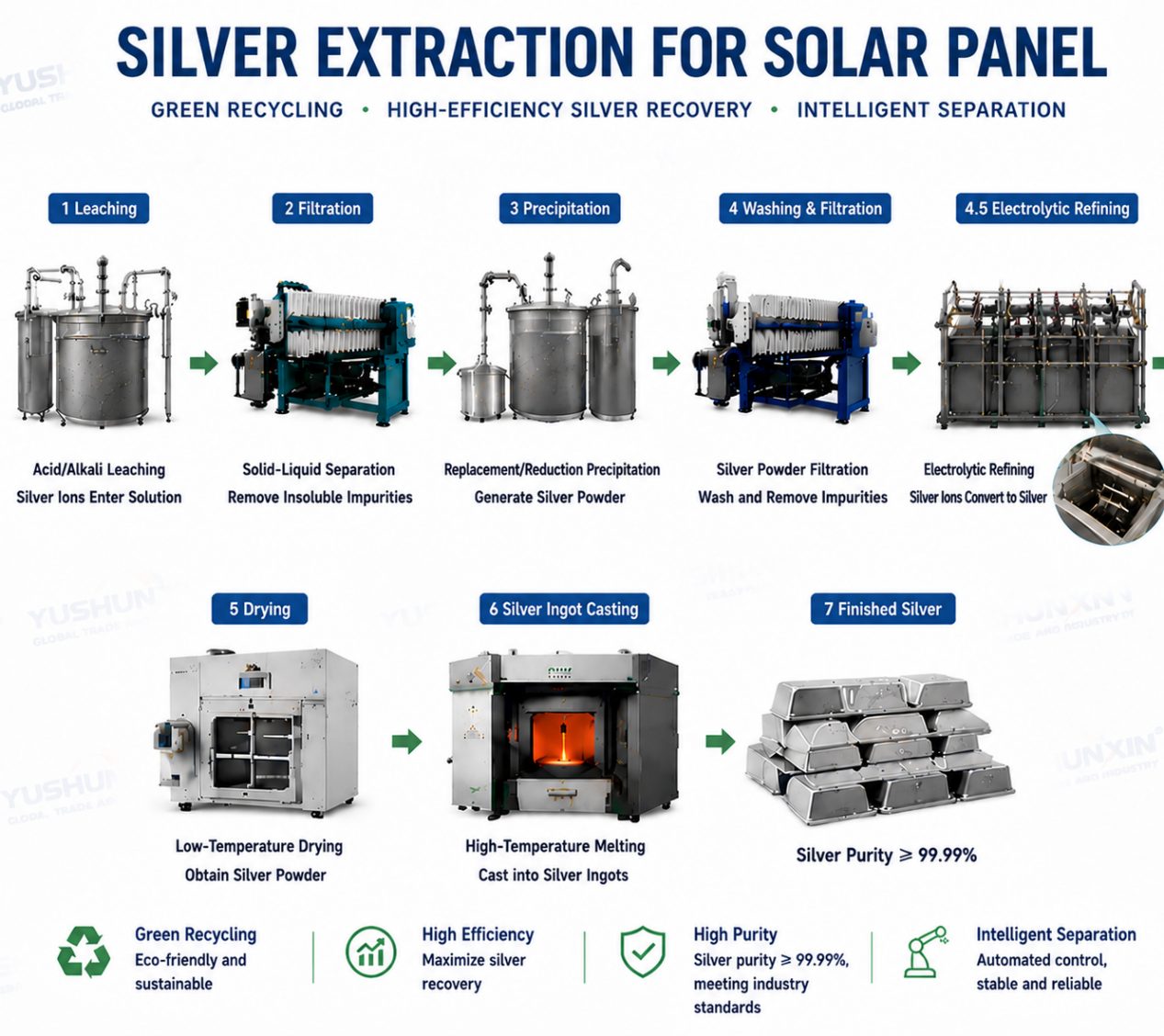
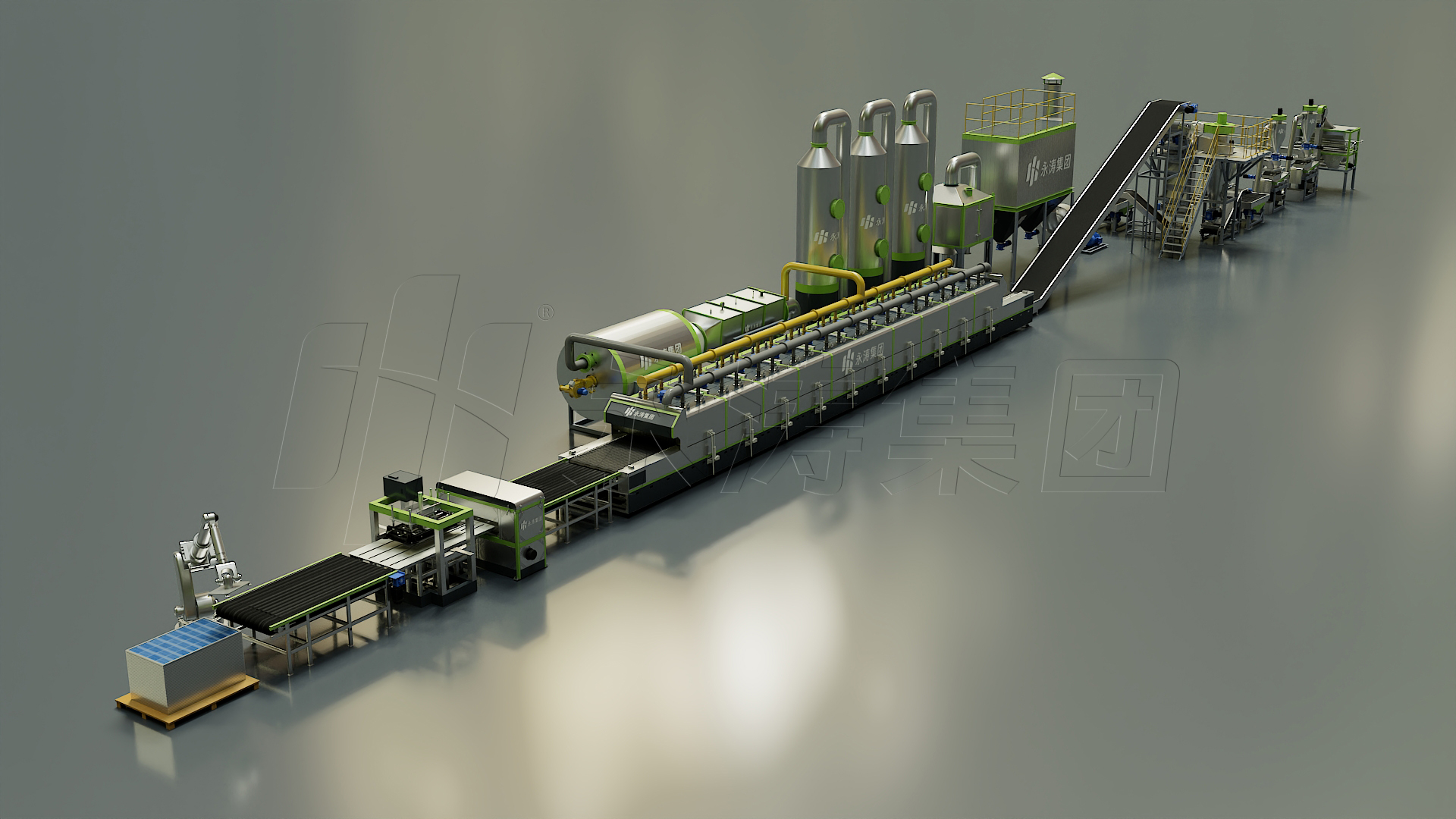
Mechanical routes separate the frame, junction box, glass and laminate by physical means and suit plants that want to recover clean glass and metal fractions with simpler permitting. Thermal routes use pyrolysis or similar heating to decompose the encapsulant and free the cell material, which suits plants targeting silver and the cell fraction and able to operate a thermal process. The right choice follows the module mix, the recovered fractions the business must sell, and the emission basis the site can permit.
Treatment, recovery and reuse targets under WEEE
European treatment requirements push recyclers to think in terms of fractions that can be sold or reused: aluminium frames, clean glass cullet, copper, and the silicon or silver-bearing fraction. The equipment decision follows those targets. A buyer should first define what each fraction must achieve to be saleable, then ask a supplier how the route reaches it. We keep the equipment boundary explicit and do not issue compliance conclusions on the buyer's behalf, but we help translate the requirement into an equipment scope.
Permitting and site integration
A PV line has to fit an existing or planned site, including power, footprint, dust collection, noise and the waste handling already permitted there. Glass dust and encapsulant residues are the two environmental interfaces most often underestimated. Confirming the site basis early, before drawings, prevents a line from being specified in a way the site cannot operate. This is the same discipline we apply to battery and decoating lines, and it matters as much for a mechanical PV route as for a thermal one.
Economic drivers: glass, aluminium, copper, silver and silicon
The value case for PV recycling sits in the recovered fractions: aluminium frames and copper have steady scrap value, glass is valuable only if clean enough for the cullet buyer, and the cell fraction carries silicon and, depending on the module type, silver. The economics change with module vintage and design, so a line specified around one assumption can be wrong for the actual feed. Documenting the module mix and the target buyers for each fraction keeps the investment logic honest.
How to run a tender and compare suppliers
Compare suppliers on the same basis: define the module mix, throughput, the required fraction qualities and the site constraints, then ask each supplier for a process basis, equipment list, utility demand and an emission interface. Suppliers that answer with a single machine price before asking for the feed are not answering the same question. A comparable tender shows which bid is under-scoped, because the missing stages usually appear as hidden site work later.
- State the module mix, glass construction and frame condition
- Define target throughput and annual volume
- Define the fraction qualities you must sell
- State site power, footprint and emission basis
- Ask for process basis, equipment list and utility demand in every bid
What to send us for a PV project assessment
Send the module dimensions and glass thickness, whether the feed is single or double glass and framed or frameless, the share of damaged or contaminated modules, the target throughput and the recovered-output targets. From those we confirm whether a mechanical or thermal route fits, what the front-end preparation must cover, and which equipment detail on the dedicated PV site matches the project. We also state the information still needed before a firm proposal.
Where the deep equipment detail lives
The confirmed specifications, machine catalogue and multilingual content for PV equipment live on pvdeframe.com, the dedicated deep site. Keeping that detail there avoids duplicating it here and lets this page stay focused on the European project decision. When you are ready for equipment selection, the PV site carries the frame removal, glass release and front-end line specifications that follow from the route decision made on this page.
PV route decision in three steps
Module mix, glass construction, frame condition and contamination define the front-end stages. Framed single-glass, double-glass and frameless modules do not behave the same way in a line.
- Clean glass cullet quality for the glass buyer
- Aluminium frame and copper purity targets
- Silicon or silver-bearing cell fraction specification
Mechanical treatment suits clean glass and metal recovery with simpler permitting; thermal treatment targets the encapsulant and cell fraction. The choice follows the feed and the fractions, not the brochure.
PV recycling FAQ
How do I choose between a mechanical and a thermal PV recycling route?
The choice follows the module mix, the fractions you must sell and the emission basis of the site. A mechanical route physically separates the frame, junction box, glass and laminate, which suits a plant that wants clean glass cullet and aluminium with a simpler permit and a lower temperature process. A thermal route decomposes the encapsulant to free the cell material, which suits a plant targeting the silicon or silver-bearing fraction and able to operate a thermal process with its off-gas system.
The two routes are not interchangeable in every case. A plant taking mostly damaged mixed modules with thin glass may struggle with mechanical glass recovery, while a plant that only needs clean glass and metal may not need thermal treatment at all. We recommend sending the module mix and the target fractions first; from those we confirm which route fits and point to the matching equipment detail on the dedicated PV site.
Whichever route you choose, fix the site power, footprint, dust and emission interfaces early. Those inputs change the line layout and the permit, and they are cheaper to design in than to retrofit after commissioning.
The same decision also affects operating cost and product flexibility. A mechanical route is typically easier to run and maintain for a pure glass-and-metal target, while a thermal route adds an energy and off-gas system that only pays for itself when the cell fraction is the value. Keeping the fraction targets front and centre prevents the route decision from drifting toward whichever equipment is easier to sell.
This is why the route discussion should start with the fractions, not the machine. When the glass buyer, the metal buyer and the cell buyer have each stated what they accept, the route almost selects itself, and the equipment question becomes the last step rather than the first.
The same logic applies to the permit. A route that is chosen for its fractions is easier to justify to a permitting authority, because the treatment and recovery targets are already written down and the equipment is there to reach them. Starting from the machine instead means justifying the process backwards, which is exactly how projects get stuck.
What information do you need before quoting a PV recycling line?
The minimum specification starts with the module mix: dimensions, glass thickness, single or double glass, framed or frameless, and the share of damaged or contaminated modules. From that we know which front-end stations are needed. Next is throughput, stated as an hourly rate and an annual volume, because the line duty and the working pattern are different questions. Then the recovered fractions: what quality the glass cullet, aluminium, copper and cell fraction must reach to be saleable.
Finally we need the site basis: available power, footprint, dust and noise limits, and the emission and waste interfaces already permitted. With those four groups we can return a process route, an equipment scope and a list of anything still missing before a firm quotation.
A representative sample is valuable but not always required at the first stage. It becomes essential when the route must be validated against a specific module construction or contaminant, which is why we ask for the sample before locking the separation settings.
Buyers who prepare this information before talking to suppliers get comparable bids instead of a spread of machine prices that cannot be compared. The sample becomes the final check rather than the starting point, because the module mix and site basis have already narrowed the route to one or two realistic options.
The same preparation turns a long procurement into a short one. A buyer who arrives with the module mix, throughput, fraction targets and site basis can receive a route in days, while a buyer who starts with a machine name spends weeks cycling through questions that the data would have answered.
Preparation also protects you from being quoted a line that looks cheap but is missing a stage. When the feed and output data are in the request, a supplier cannot quietly leave out the front end or the off-gas system and still call the bid complete. The missing stages show up as gaps against the data you supplied.
Why is the deep equipment detail on a separate PV site?
The dedicated PV equipment site carries the full machine catalogue and the confirmed specifications for frame removal, glass release, junction-box stations and complete front-end lines. Keeping that detail in one place avoids repeating it across sites and lets this page stay focused on the European project decision: collection obligations, route selection, permitting and the information needed to size a line.
For a buyer this separation is also practical. The project decision comes first, and only after the route is chosen do the specific machine specifications matter. When you are at that stage, the PV site gives you the deep detail without forcing you to read through the battery and decoating content that does not apply to your project.
If you are unsure which route or machine fits, send the module mix and target fractions. We will confirm the route and point you to the exact equipment pages instead of leaving you to search the catalogue.
This division of labour is normal for a focused portfolio. The project-level pages decide the route and the compliance context, and the equipment deep site carries the machine detail that follows from that decision. Keeping them separate also keeps each page answerable to one search intent instead of trying to be everything at once.
It also makes maintenance easier. A page that answers one question can be updated when that answer changes, without disturbing the rest of the site, and the reader always lands on the page that matches their intent instead of a single page that tries to answer every question at once.
For an engineering buyer this structure matters more than it looks. When you are evaluating a PV project, you want the project decision in front of you, not buried under machine specifications that belong to a later stage. A page that respects that order respects the way the buying decision is actually made, one stage at a time.
Planning a PV line for the long term
How do I make sure the PV line I buy today still fits rising module volumes in five years?
Buy the line against the module mix and the fractions, not against today's volume alone. A route specified for framed single-glass, double-glass and frameless modules keeps working as the feed mix shifts, while a route specified for one vintage of module becomes a bottleneck when the next generation arrives.
Lay the site out for expansion from the start. Extra space for a second front-end station, a longer separation train or a larger glass-handling area costs little at the layout stage and a great deal later. The first purchase should be a module of a larger design, not a closed system that must be rebuilt to grow.
Keep the permit and emission basis aligned with the future route. If you may add a thermal stage later, confirm now that the site can permit it, even if you start mechanical. This avoids buying a mechanical line that can never be extended because the site cannot take the thermal off-gas.
Finally, document the fraction buyers early. The glass, aluminium, copper and cell fractions have different offtake requirements, and a line that is flexible on input but rigid on output can still strand value. Fix the output specifications with the buyers, then size the route to reach them across the feed range you expect.
Documenting the buyers early also protects you in negotiation with the equipment supplier. When the output specifications are fixed, the route has to meet them, and the supplier cannot quietly reduce a separation stage and claim the line still works. The output targets are the standard every bid is measured against.
Output specifications also force the supplier to be honest about trade-offs. If reaching a stricter cullet quality costs throughput, that trade-off has to be stated against the target you wrote down, instead of being hidden in the fine print. Fixing the outputs first is therefore the cheapest way to keep the whole procurement honest.