
ENV-SOL-UBC UBC Decoating Furnace for Used Beverage Cans
A continuous rotary decoating furnace that removes lacquer and coatings from shredded used beverage cans under controlled low-oxygen heating, cutting remelting dross loss.
The ENV-SOL-UBC removes lacquer, paint and printed coatings from used beverage cans before the metal enters the melting furnace, using a continuous rotating drum with internal flights that keeps the charge moving and the coating exposure even. Volatilised coating is recirculated and treated, so the decoating stage contributes energy back to the process instead of simply burning the coating in the melt.
Why decoating belongs before the melt furnace, not inside it
When coated cans are charged directly into a melting furnace, the coating burns inside the melt chamber, consuming metal as dross, adding carbon and oxide load to the bath and complicating the furnace off-gas. Removing the coating first under controlled low-oxygen conditions keeps the charge clean and the emission stream manageable. The economic case is straightforward: less metal lost to dross means more saleable aluminium from the same feed, and a cleaner charge means fewer interruptions for dross removal and flux addition.
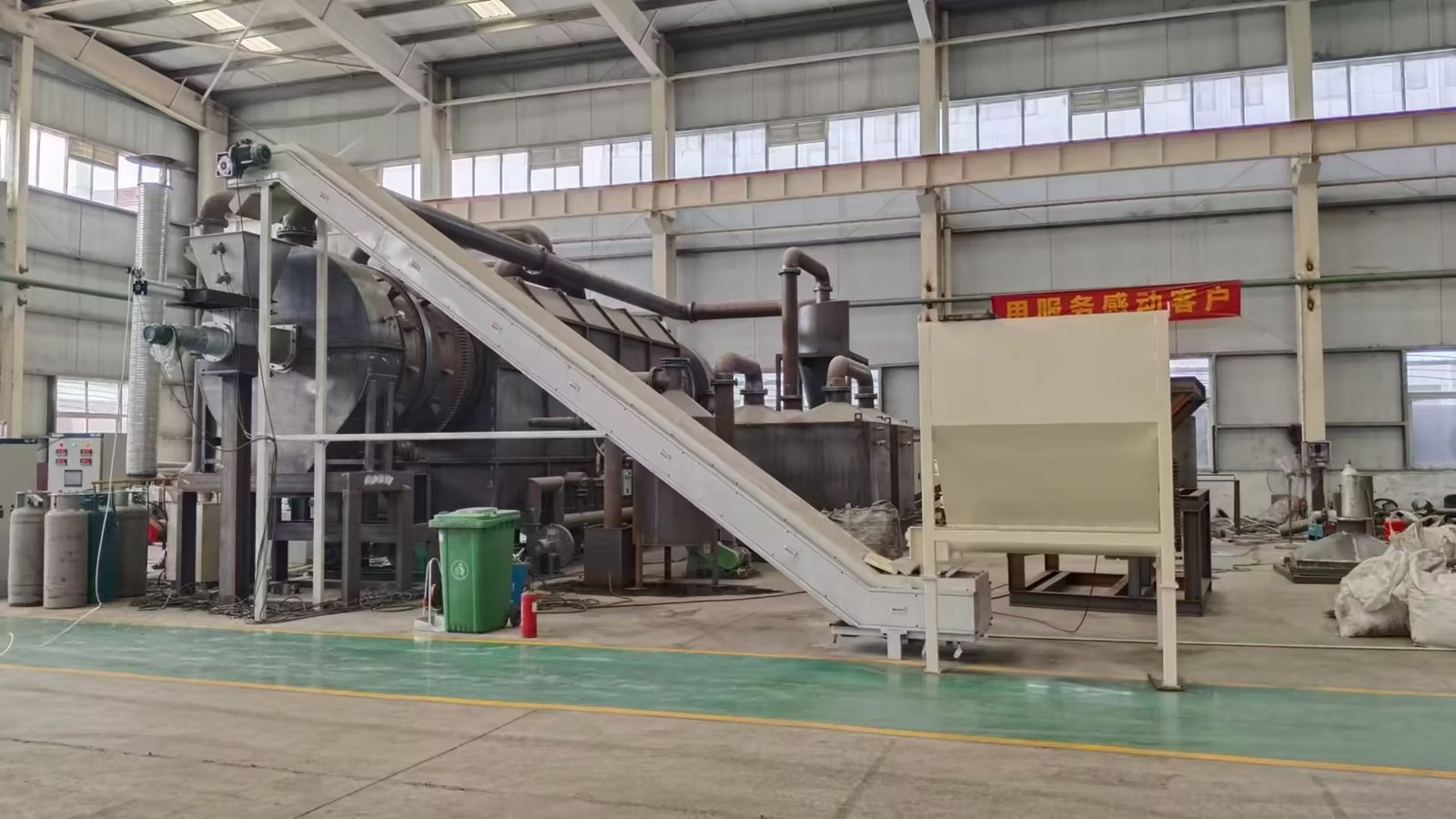
The comparison is easy to visualise but often missed in buying decisions. A can that sheds its lacquer inside the melt does not disappear; it becomes dross and furnace fume that the operator pays to remove and to clean. Doing that work in a dedicated decoating stage keeps both the metal and the melt furnace working on their own job.
The dross figure tells only part of the story. A cleaner charge also means less flux, fewer furnace interruptions and a more predictable melt, which are worth as much as the metal saved. Decoating is therefore a furnace uptime decision as well as a yield decision, and it pays back in both the metal account and the operating account.
How the continuous rotary drum keeps the charge even
A continuous rotating drum with internal flights lifts and tumbles the shredded cans so every surface sees the low-oxygen heating atmosphere for a consistent residence time. This is the difference between a batch oven and a production furnace: the drum delivers a steady stream of clean metal to the melt rather than cycling loads, which suits a continuous melting line. Feeding, drum speed, atmosphere and the transfer to the melting stage are sized together, because a decoater that outpaces the melt furnace just moves the bottleneck downstream.
Even exposure is what separates a production furnace from a batch oven. If some cans pass through too quickly, coating remains; if others dwell too long, metal oxidises. The flights are arranged to tumble the charge through the heating zone at a controlled pace, so the residence time stays consistent across the full throughput range.
The flights also protect the metal from local overheating. By keeping the charge moving, the drum avoids the hot spots that oxidise metal sitting still, so the residence time stays even and the burn loss stays low across the full throughput range. Even exposure is what makes the difference between a production furnace and a batch oven that leaves part of the charge half-cleaned.
Confirmed specifications and the energy loop
| Capacity | 2-8 metric tons per hour |
|---|---|
| Furnace type | Continuous rotating drum with internal flights |
| Metal burn loss | below 0.5% |
| Feedstock | Shredded UBC and aluminium beverage cans |
| Energy | Syngas regeneration from volatilised coating |
The volatilised coating is not treated as a disposal problem. It is recirculated as a fuel gas and the remainder is routed through the off-gas system, which reduces the external energy the furnace needs. The exact energy balance depends on the coating load and throughput, so it is confirmed for the project rather than quoted as a universal figure.
Because the energy loop depends on the coating, the public page states the confirmed design envelope and leaves the project energy balance to the quotation. A buyer should ask for the balance against its own feed rather than accept a universal efficiency figure that assumes someone else's paint load.
Read the table as a design envelope. The capacity, furnace type, burn loss, feedstock and energy entries are the stable basis, while the exact energy balance and melt interface are confirmed for your feed. That split keeps the page specific without pretending one number fits every melt shop.
The stable envelope also makes the offer checkable. A buyer can compare the capacity, the burn loss and the feed classes against other bids on the same basis, while the project energy balance is confirmed separately against the actual coating load. Keeping the two apart is what stops a universal energy figure from being mistaken for a promise on a specific feed.
Process route from metering to melt transfer
Feeding
Shredded cans are metered into the drum at a rate matched to the melt capacity.
Decoating
Coatings are removed under controlled low-oxygen heating while the flights keep the charge moving.
Off-gas handling
Volatiles are recirculated and the remainder treated before release.
Transfer to melt
Clean metal is delivered to the melting furnace with dross-forming coating already removed.
Each step is sized with the next. The feed rate is set by the melt capacity, the drum speed is set by the residence the coating needs, and the off-gas stage is set by the volatile load those two produce. Sizing them in isolation is how a decoater ends up faster or slower than the furnace it feeds.
Each interface is a place where a mismatched specification shows up. If the off-gas stage is undersized, the permit fails; if the melt transfer is undersized, the furnace starves; if the feed metering is wrong, the drum runs half empty. Sizing the steps together is what turns four separate machines into one continuous line that delivers clean metal at the rate the melt shop needs. That balance is what turns the furnace from a machine into a melt-shop feed system.
Feed, coating and melt interface that determine the build
UBC is not one uniform material. Shredded density, residual moisture, the type and thickness of the lacquer, and the target residual limit all change the furnace duty. The melt interface matters equally: the decoater must deliver hot clean metal in a form the melting furnace can accept, at the right temperature and rate. When the feed and melt basis are fixed together, the line runs as one continuous system instead of two machines that fight each other on throughput.
Feed variability is the norm, not the exception. Shredded density changes with the baler, lacquer thickness changes with the can supplier, and moisture changes with storage. The furnace is set to tolerate that range, and the buyer should describe the extremes, because a machine specified for the average struggles on the days that matter.
The buyer should also state how the feed arrives, because baled, shredded and loose cans feed differently and change the front-end handling. A furnace specified for one arrival form can be wrong on the first delivery, and the correction costs more than the question would have. Feed condition is therefore a specification input, not a detail for the site team to solve.
Emission and energy basis for a decoating installation
Decoating releases coating volatiles, so the off-gas route is part of the machine specification, not a site afterthought. The system is designed around the published thermal process emission basis, including thermal oxidation and downstream gas cleaning, and the buyer's permit determines the final interfaces. Asking for the coating chemistry and the site emission basis before quotation keeps the furnace from being specified in a way the site cannot legally operate.
The emission question is not a formality to sign off at the end. The permit decides whether the recirculation loop and the off-gas cleaning can be used as designed, and the supplier needs that answer while the furnace is being specified. Asking for it early keeps the delivery from stalling on a permit detail.
Designing the off-gas in from the start is cheaper than retrofitting it, and it keeps the recirculation and emission stages working as one system. The permit question is part of the furnace specification, not a task for after installation, and a buyer who asks it early gets a furnace that can actually run on the site it was bought for. The permit and the furnace are one decision.
Choosing the right decoating duty
UBC decoating targets a thin lacquer on a light, high-volume shredded feed, while coated aluminium scrap such as painted profiles and PVDF panels needs a different temperature profile and often a heavier section. Mixing the two into one furnace specification usually compromises both.
- Continuous rotary decoating suits steady melt-furnace feed at 2-8 t/h.
- Batch cleaning is more common for hooks, fixtures and reusable industrial parts.
- The choice follows the duty cycle, not the machine catalogue.
UBC decoating FAQ
What metal loss reduction can I expect?
The confirmed specification is below 0.5% metal burn loss in decoating, and the purpose of removing the coating before melting is to cut the dross loss that occurs when coatings burn inside the melt furnace. The final melt loss depends on the downstream furnace and feed, so we state the decoating figure and let the melt result be calculated on the project.
Does the furnace run continuously?
Yes. The rotating drum with internal flights is a continuous design that meters shredded cans through the low-oxygen heating zone and transfers clean metal to the melting stage, which keeps the decoating duty matched to a continuous melt line.
Can it handle painted aluminium scrap as well as UBC?
UBC and coated aluminium scrap are different duties. We specify them separately, so if you process both, send both feed types and we will confirm whether one furnace or two dedicated lines fit better.
Related equipment and applications
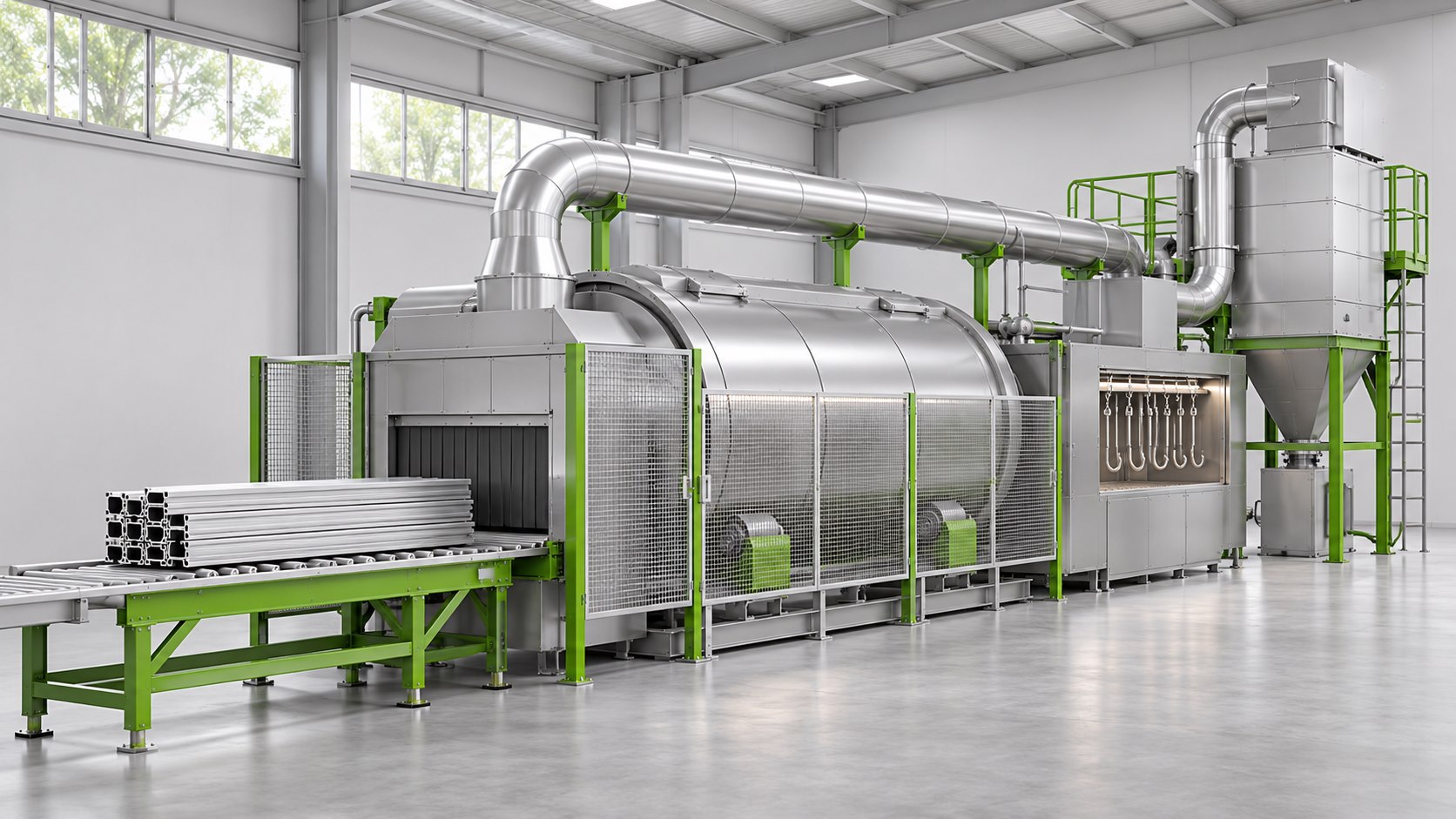
UBC Decoating Application
How controlled low-oxygen heating protects metal yield and keeps emissions manageable.
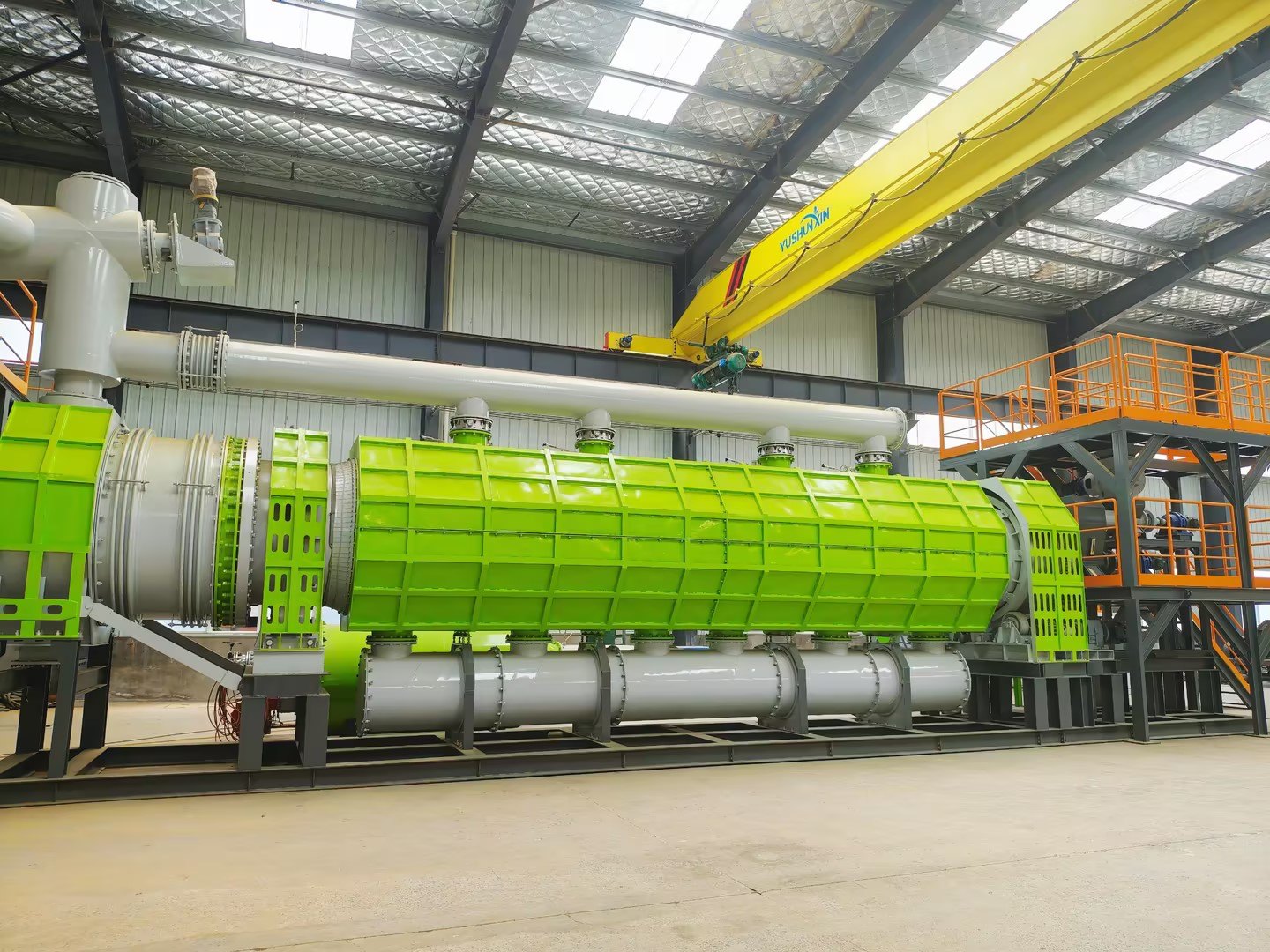
UAE UBC Furnace Reference
A decoating furnace that recirculates paint off-gas and cuts remelting melt loss.
Thermal Decoating & Cleaning
The full board covering UBC, coated scrap, hooks and industrial parts.