Lithium Battery Recycling in Europe: Buyers, Competitors and What to Ask
European battery recycling is expanding fast around black mass, but planned capacity runs ahead of real feed in places. The winning specification is built from the feed, the safety basis and the refiner's acceptance document, not from a headline capacity.
The EU Battery Regulation 2023/1542 has turned spent batteries into a resource with defined treatment and recovery expectations. This briefing maps the European buyers, the plant suppliers and the questions that separate a comparable, future-proof quotation from a generic shredder.
Market shape: capacity ahead of feed
European lithium battery recycling is growing quickly, but public capacity listings are fragmented and some announced projects have slipped. The recurring pattern is that planned treatment capacity runs ahead of the secure feed, which is why buyers increasingly anchor a purchase to the chemistry, format and state of charge of the material they can actually secure, and to the refiner that will buy the black mass. The material, not the capacity table, decides the line.
Who buys a battery recycling line
| Buyer segment | What they need | Purchase trigger |
|---|---|---|
| Black mass / mechanical pre-treatment plants | Discharge, shredding, multi-stage separation into black mass, copper and aluminium | EU Battery Regulation treatment duties |
| Hydromet and pyromet refiners | Consistent black mass with low copper and aluminium contamination | Feed security and expansion |
| Battery plants and carmakers | In-house scrap handling or co-built recycling | Production scrap and supply-chain duties |
| Integrated waste groups and EPCs | Whole-line interfaces, safety, dust and fire basis | Regional treatment capacity |
Competitor landscape
The European plant suppliers are concentrated in Austria, Germany, Finland, France and Italy. ANDRITZ and Duesenfeld announced a cooperation in February 2025 covering shredders and dryers for mechanical pre-treatment, with the Duesenfeld pilot plant in Wendeburg as the first reference. BHS-Sonthofen describes itself as a production-scale leader and supplied BASF a mechanical plant rated at 15,000 tonnes a year. Metso offers black mass processing and a precursor cathode active material plant. MTB Recycling has run an EV battery pilot line since 2019 and works with Revtech and the LEPMI laboratory on inert shredding, while Stokkermill and Forrec supply Italian-built battery plants and shredders.
| Supplier | Country | Position |
|---|---|---|
| ANDRITZ | Austria | Shredding, dewatering and drying; Duesenfeld cooperation |
| BHS-Sonthofen | Germany | Battery recycling plants; BASF 15,000 t/yr mechanical line |
| Metso | Finland | Black mass processing and pCAM plant |
| MTB Recycling | France | EV battery pilot line and inert shredding |
| Stokkermill / Forrec | Italy | Battery plants and industrial shredders |
The recycling operators on the demand side include Umicore in Belgium, Fortum's Crisolteq operation in Finland, Accurec and Duesenfeld in Germany, SNAM and EDI in France, Ecobat and Redux in Germany and the UK, Primobius in Germany, and Hydrovolt in Norway. Each of them is a potential buyer of capacity, and each holds a specific view of black mass quality.
The questions that make bids comparable
- Chemistry - LFP, NMC or a defined mix, because it changes safety and separation design
- Format - pouch, prismatic or cylindrical, and whether feed is cells, modules or packs
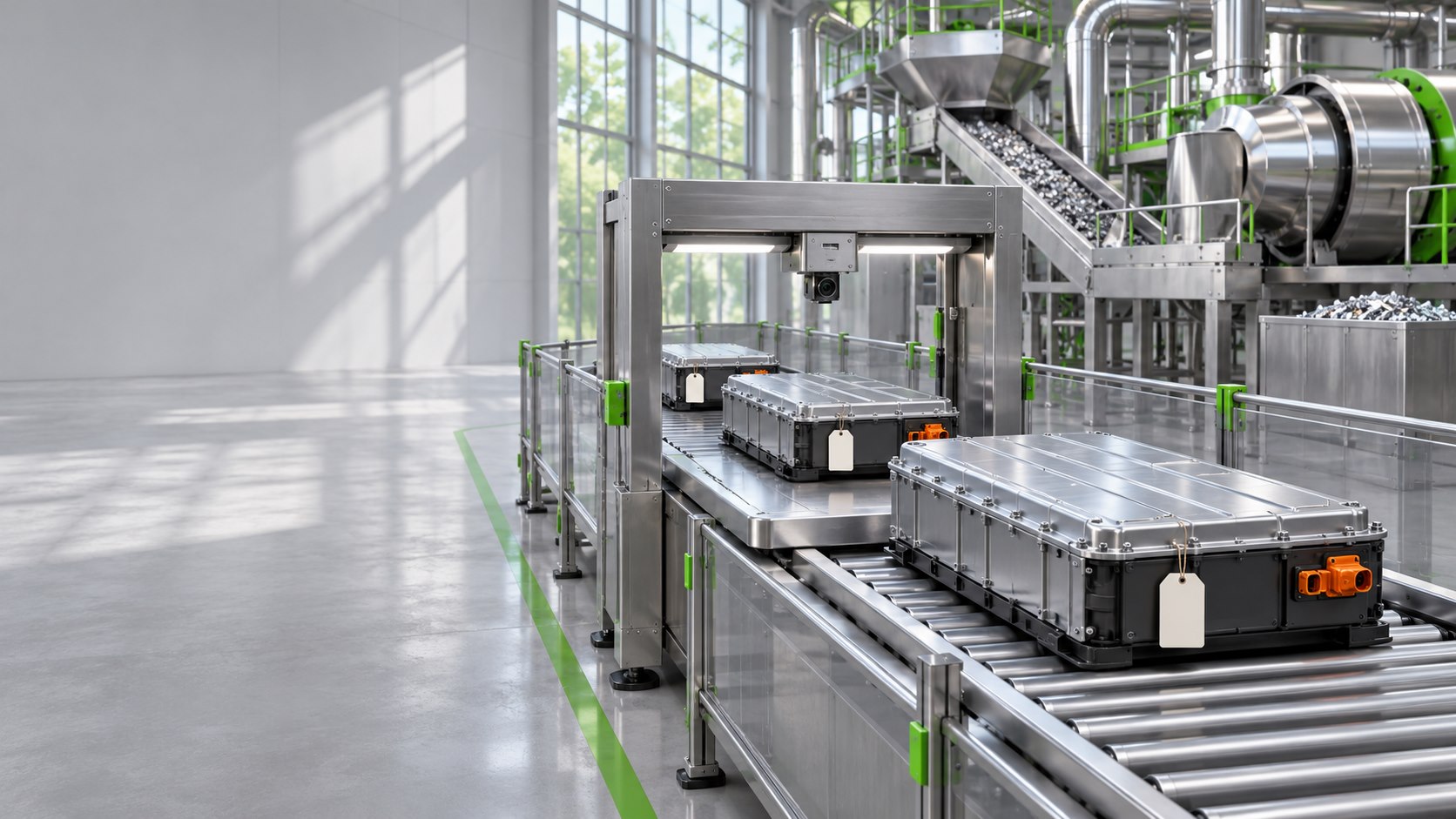
- Condition - production scrap, rejected cells or end-of-life batteries with residual charge
- Throughput - the cell feed rate the line must sustain
- Target fractions - black mass, copper and aluminium against the refiner's acceptance specification
- Safety basis - discharge route, inerting duty, dust and fire interfaces
Where YUSHUNXIN fits
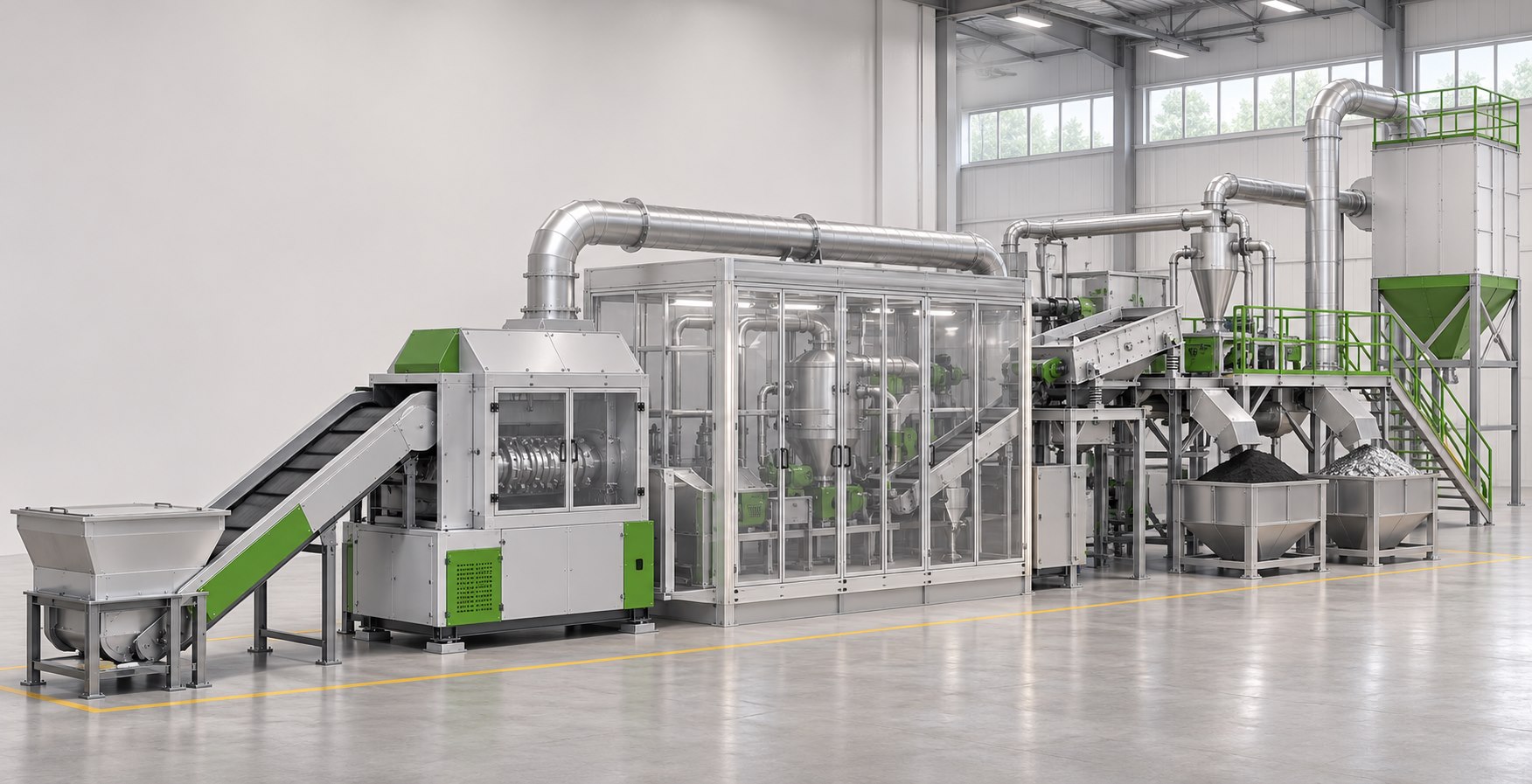
The ENV-SOL-LFP battery recycling solution is confirmed for 500 to 3,000 kg/h of cell feed with nitrogen inerting below 3% oxygen and black mass from 95% upwards, but the final configuration follows the feed and target fractions above. The dry physical route separates black mass, copper and aluminium without wastewater discharge, and the equipment boundary is stated against the operator's own compliance responsibility.
Battery market FAQ
Is the European market oversupplied with capacity?
Planned capacity currently runs ahead of secure feed in several countries, and some projects have slipped. That makes feed security and the refiner's acceptance specification more important than a headline capacity when comparing lines.
How do I compare European and Chinese battery plant suppliers?
Put both on the same basis: the same feed definition, the same target fractions, the same safety and emission interfaces, and the same scope of supply. The differences then become visible in the separation design and the evidence, not in marketing adjectives.
What does the EU Battery Regulation require of a line?
It sets treatment and recovery expectations rather than dictating one machine. A line specified around the feed and the recovered fractions is easier to document against the framework than a generic shredder bolted to separation later.