
EU Battery Regulation 2023/1542: What Recyclers Should Prepare
The EU Battery Regulation treats spent batteries as a resource with defined treatment requirements. For an equipment buyer, the practical question is how those requirements shape the discharge, shredding and separation design.
Regulation (EU) 2023/1542 covers the full battery life cycle, including the treatment and recycling of spent batteries. This briefing is not legal advice; it explains what the framework means for the equipment a recycler specifies.
What the framework changes for spent battery treatment
The regulation shifts the focus from simply processing batteries to recovering materials with defined efficiency and documenting the treatment. For an operator this means the plant is specified against the chemistry, format and condition of the batteries it will treat, and against the recovered fractions it must produce. The regulation is referenced here as the framework, not reproduced, and the equipment boundary is kept explicit: YUSHUNXIN supplies the treatment line and does not issue compliance conclusions on the operator's behalf.
Treatment requirements drive the route
A line that meets the spirit of the framework is one that recovers black mass, copper and aluminium cleanly rather than shredding everything into a mixed fraction. The discharge, shredding and separation stages are therefore specified to produce separated fractions, which is also where the economic value sits.
Equipment implications for black mass recovery
Black mass value depends on composition, moisture and freedom from copper and aluminium, and the regulation's focus on material recovery pushes the line toward cleaner separation. In practice that means the discharge step is designed in, the shredding is inerted to protect both safety and material quality, and the separation stages are tuned to the refiner's acceptance specification. A buyer should define that acceptance specification before fixing the black mass target, because it is the document that sets the separation performance the line must reach.
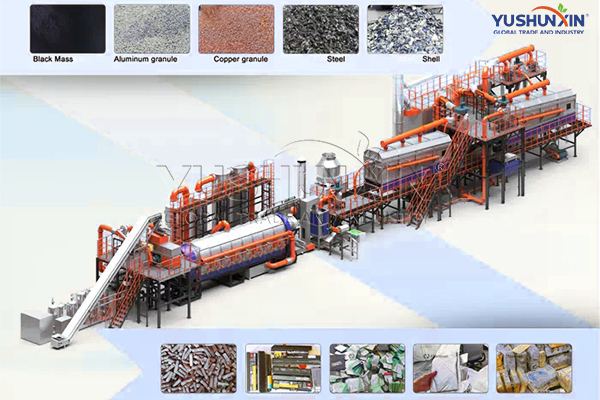
How to prepare a compliant, future-proof line
Preparing a line means fixing four things before purchase: the chemistry and format of the feed, the target throughput, the recovered fraction qualities, and the site's fire and emission basis. From those, the discharge route, inerting duty, separation stages and utility interfaces follow. A line built this way is easier to document against the regulation and easier to extend as feed supply grows. The alternative, buying a generic shredder and bolting on separation later, produces exactly the mixed, undocumented stream the framework discourages.
- Define chemistry, format, condition and state of charge
- Set black mass, copper and aluminium quality targets
- Confirm the site fire and emission basis
- Document the supplier and buyer responsibility boundary
EU Battery Regulation readiness FAQ
Do you issue compliance certificates for battery treatment?
No. We supply the treatment line within an agreed equipment boundary and reference the official framework, but the compliance conclusion for a site remains with the operator and its advisers. What we do is design the discharge, shredding and separation stages so the plant can document its recovered fractions cleanly.
How do I know my line will stay compliant as rules evolve?
Build the line around the feed and the recovered fractions rather than a single machine purchase. A route specified against chemistry, format, condition and output targets is easier to adapt and easier to document as requirements tighten, because the evidence trail is built into the design instead of added afterwards.